
Cupcakes Overflowing? Here's the Fix
By Sarah, Incr-EdibleCupCakes. Updated 2026-08-31.
Cupcakes overflow when liners are filled past three-quarters full or when batter is too thin and full of gas from overmixing or too much leavener. Fill to three-quarters, check your batter thickness, and measure leavener carefully.
| Cupcake Size | Batter Amount | Fill Level |
|---|---|---|
| Mini | 1 tablespoon | 3/4 full |
| Standard | 3 tablespoons (#20 scoop) | 3/4 full, 1/2 inch below rim |
| Jumbo | 1/3 to 1/2 cup | 3/4 full |
Why Are My Cupcakes Overflowing?
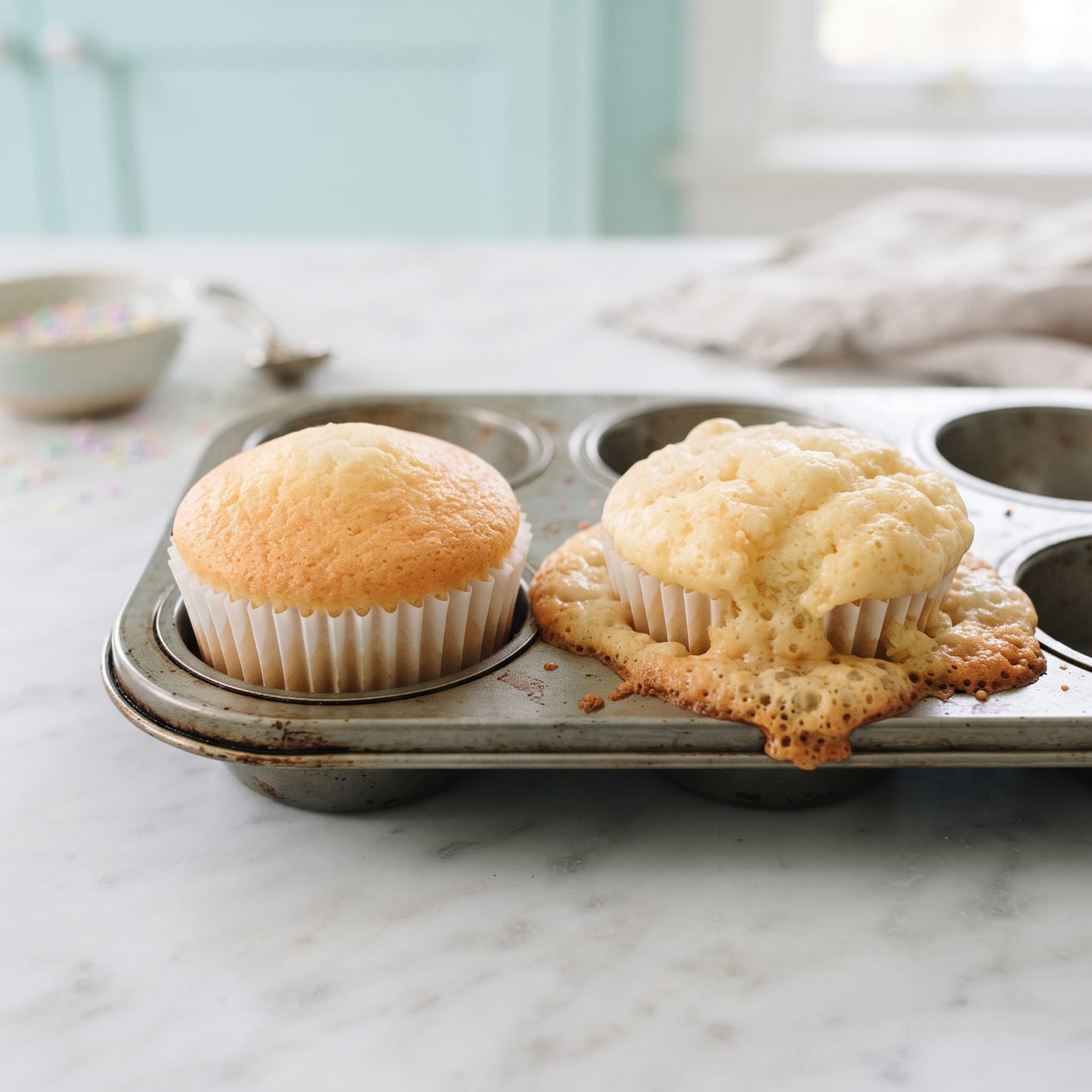
Cupcakes overflow mostly because of two things: too much batter in the liner, or batter that is too thin and gassy. I tested both causes side by side in my kitchen and they behave differently in the oven.
Overfilled liners simply run out of room as the batter rises and spill over the edges. Thin batter, on the other hand, traps air bubbles that expand fast, pushing batter up and over even when the fill line looked fine going in.
- Overfilled liner: batter physically has nowhere to go.
- Thin batter: too much liquid or too little flour ratio.
- Too much leavener: extra rise with no structure to hold it.
- Oven too hot: outer edges set before center finishes rising.
The Three-Quarter Height Rule
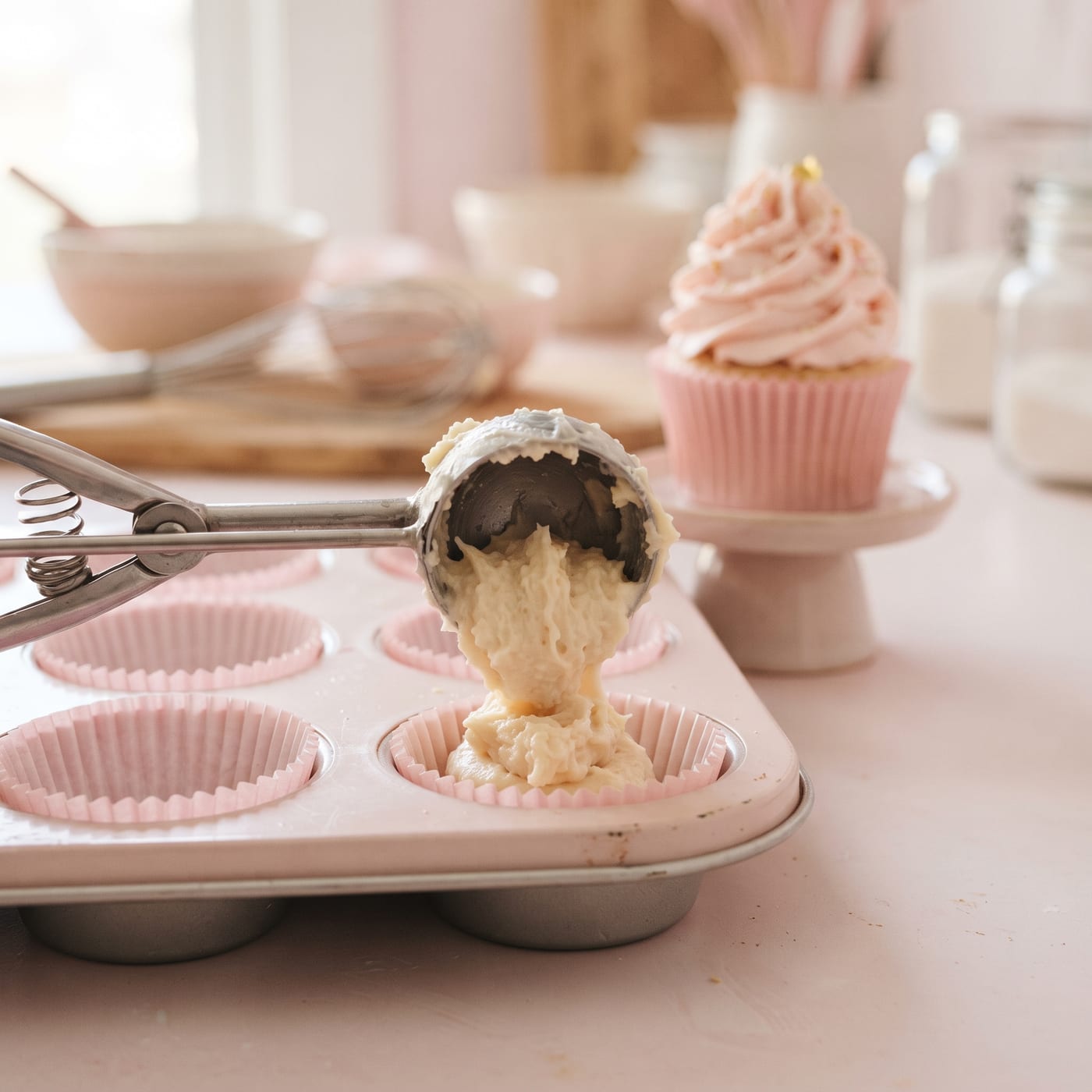
Fill each cupcake liner no more than three-quarters full, and this single rule solves most overflow problems. That leaves room for the batter to rise and dome without spilling over the paper edge.
I use a standard #20 cookie scoop, about 3 tablespoons, for regular liners. That fills mine to just under the three-quarter mark every time, and I never have to guess.
- Standard liner: fill to about 1/2 inch below the rim
- Mini cupcakes: use 1 tablespoon of batter per liner.
- Jumbo cupcakes: use 1/3 to 1/2 cup of batter per liner
- Always check one pan before filling the rest of the batch.
How Batter Viscosity Causes Overflow
Batter that is too thin rises faster and less evenly, which is a common reason cupcakes overflow even when liners look correctly filled. Thin batter has less structure from flour and fat, so gas bubbles expand quickly and push liquid over the top before the crumb sets.
The fix is ratio, not guesswork. Good cupcake batter should coat a spoon and fall in thick ribbons, not pour like pancake batter.
- Too thin: batter pours quickly and looks watery.
- Just right: batter drops off a spoon in a slow, thick ribbon.
- Too thick: batter barely moves when the bowl is tilted.
- Fix thin batter by adding 1 to 2 tablespoons flour at a time.
Leavener and Mixing Mistakes That Add Up
Too much baking powder or soda creates a fast, unstable rise that often overflows the liner. Always measure with a dry measuring spoon and level it off, since a rounded scoop can add 20 percent extra leavener without you noticing.
Overmixing after adding flour also builds too much air into the batter. That extra air expands fast in the oven and can push batter over the edge before the structure firms up.
- Level baking powder and soda with a knife, never a rounded scoop.
- Mix flour in on low speed just until it disappears.
- Stop mixing as soon as no dry streaks remain.
- Double check the recipe amount matches your pan size.
Oven Temperature and Pan Setup
An oven that runs hot can cause cupcakes to overflow because the outside sets before the inside finishes rising. Trapped gas has nowhere to go but up and out over the sides.
I always check my oven with a separate thermometer, since built-in dials can run 15 to 25 degrees off. Bake at 350°F unless your recipe says otherwise, and use the middle rack for even heat.
- Test oven accuracy with an oven thermometer.
- Bake at 350°F for most standard cupcake recipes.
- Use the middle rack, not top or bottom.
- Avoid opening the door in the first 15 minutes.
FAQ
What is the three-quarter rule for cupcakes?
Fill each liner no more than three-quarters full so batter has room to rise and dome without spilling over the edge during baking.
Why do my cupcakes overflow even when I don't overfill them?
Batter that is too thin traps too much gas and rises unevenly, pushing liquid over the liner even at a correct fill level. Thicken the batter with a bit more flour.
Does too much baking powder cause cupcakes to overflow?
Yes. Extra baking powder or soda creates a fast, unstable rise the batter structure cannot hold, often forcing it over the liner edge.
Can oven temperature cause cupcakes to overflow?
A too hot oven sets the outer crumb before the inside finishes rising, trapping gas that then pushes batter up and over the sides.
How full should mini cupcake liners be?
Fill mini liners with about 1 tablespoon of batter each, roughly three-quarters full, since they rise proportionally the same as standard cupcakes.