
High-Altitude Cupcake Baking Adjustments
By Sarah, Incr-EdibleCupCakes. Updated 2026-06-05.
At elevations above 3,500 feet, cupcakes need less leavening, more flour, and a hotter oven. These simple adjustments stop your cupcakes from sinking, doming, or drying out.
| Elevation | Reduce Baking Powder | Extra Flour | Reduce Sugar | Extra Liquid | Raise Oven Temp |
|---|---|---|---|---|---|
| 3,500 to 5,000 ft | 1/8 tsp per tsp | 1 tbsp per cup | 1 tbsp per cup | 1 to 2 tbsp | +15 F |
| 5,000 to 7,000 ft | 1/8 to 1/4 tsp per tsp | 2 tbsp per cup | 1 to 2 tbsp per cup | 2 to 3 tbsp | +15 to 20 F |
| 7,000 to 9,000 ft | 1/4 tsp per tsp | 3 to 4 tbsp per cup | 2 tbsp per cup | 3 to 4 tbsp | +20 to 25 F |
| Above 9,000 ft | Up to 1/2 tsp per tsp (test) | 4 tbsp per cup (test) | 2 tbsp per cup | 4 tbsp (test) | +25 F (test) |
Why High Altitude Changes How Cupcakes Bake
At higher elevations, air pressure is lower, so gases in your batter expand faster and escape before the crumb sets. This is why high altitude cupcakes often dome, then collapse, or come out dry and crumbly.
The science is straightforward. Less pressure means bubbles grow too quickly, gluten and egg proteins have less time to set. And moisture evaporates at a lower temperature. Every elevation band needs slightly different fixes.
Elevation Bands and What to Expect
Your adjustments depend on how high you are. A baker in Denver at 5,280 feet needs different tweaks than someone baking in Salt Lake City at 4,300 feet or Santa Fe at 7,000 feet.
Use this breakdown as your starting point, then fine-tune after your first test batch.
- 3,500 to 5,000 ft: small adjustments, reduce leavening slightly, add 1 tbsp extra flour
- 5,000 to 7,000 ft: moderate adjustments, reduce leavening by up to 25%, add 2 tbsp flour, raise oven temp 15 F
- 7,000 to 9,000 ft: significant adjustments, reduce leavening by 25 to 50%, add 3 to 4 tbsp flour. Raise oven temp 25 F
- Above 9,000 ft: test every variable one at a time, baking becomes unpredictable and needs batch-by-batch tuning
How to Adjust Leavening at High Altitude
Reduce baking powder and baking soda first. Too much leavening is the main reason high altitude cupcakes rise fast, then crater in the center.
Start by cutting baking powder by 1/8 tsp per tsp called for in the recipe. If you are above 7,000 feet, cut up to 1/4 tsp per tsp. Baking soda is more potent, so reduce it by about 20 percent and do not go lower than 1/4 tsp total or your cupcakes will taste flat and greasy.
- 3,500 to 5,000 ft: reduce baking powder by 1/8 tsp per tsp
- 5,000 to 7,000 ft: reduce baking powder by 1/8 to 1/4 tsp per tsp
- 7,000 ft and above: reduce baking powder by 1/4 tsp per tsp; reduce baking soda by 20%
- Never cut both all the way down at once; test one change first
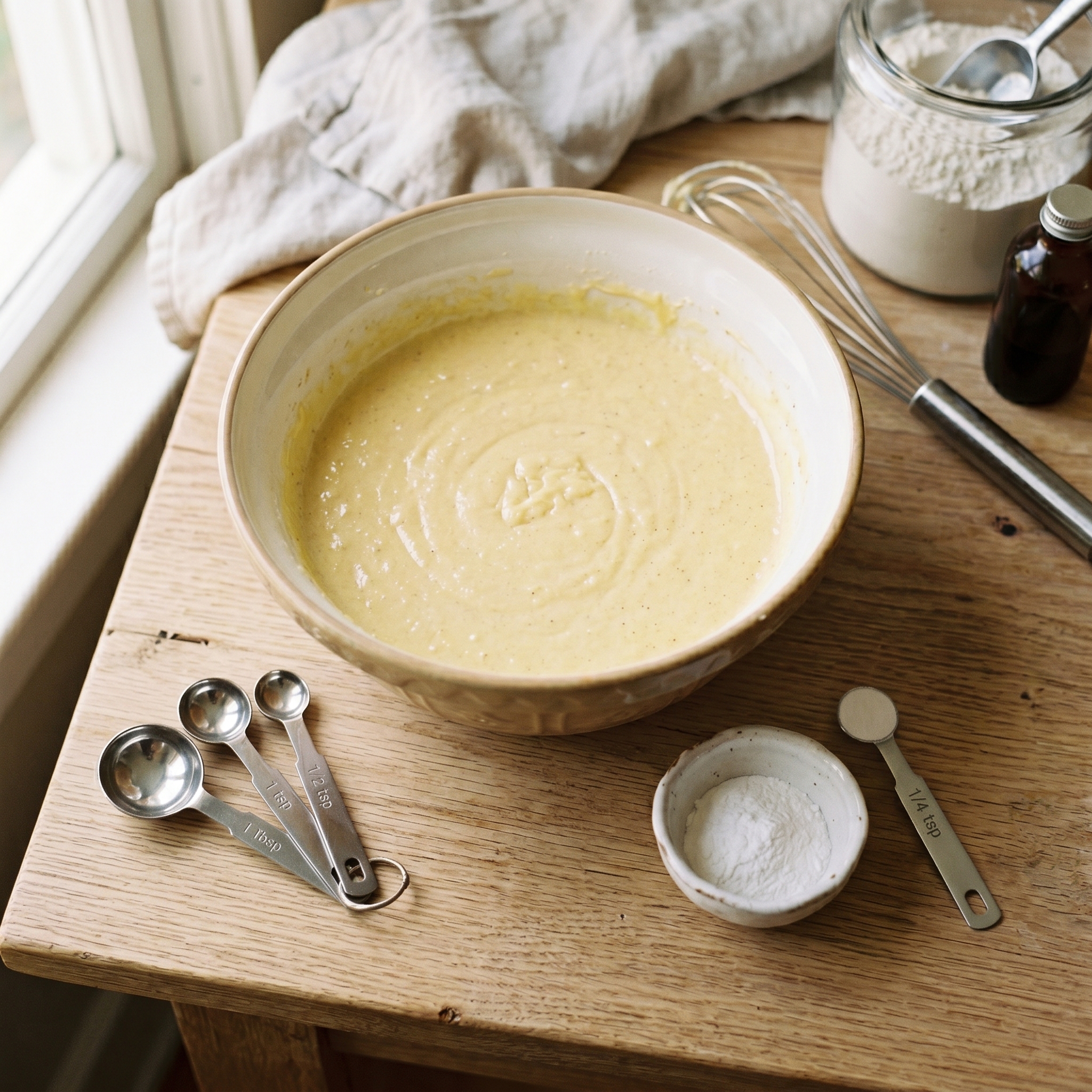
Flour, Sugar, and Liquid Adjustments
Extra flour adds structure so your cupcakes hold their rise before the crumb dries out. Add 1 to 4 tablespoons of all-purpose flour per cup called for, depending on your elevation.
Sugar holds moisture but also weakens structure. Reduce it by 1 tablespoon per cup at 5,000 feet, and up to 2 tablespoons per cup above 7,000 feet. Add 2 to 4 extra tablespoons of liquid (milk, buttermilk, or water) to replace what evaporates faster at altitude.
- Add flour: 1 tbsp extra at 3,500 ft, 2 tbsp at 5,000 ft, 3 to 4 tbsp above 7,000 ft
- Reduce sugar: 1 tbsp per cup at 5,000 ft, 2 tbsp per cup above 7,000 ft
- Add liquid: 2 tbsp extra at 5,000 ft, 3 to 4 tbsp above 7,000 ft
- Use whole milk or buttermilk for best crumb stability
Oven Temperature and Bake Time at Altitude
Raise your oven temperature by 15 to 25 degrees F. A hotter oven sets the crumb faster before the gas bubbles over-expand and the cupcakes collapse.
Check cupcakes 3 to 5 minutes earlier than the recipe says. The combination of higher temp and lower pressure means they can overbake quickly. A toothpick inserted in the center should come out with just a few moist crumbs, not completely clean.
- Standard recipe says 350 F: bake at 365 to 375 F above 5,000 ft
- Standard recipe says 325 F: bake at 340 to 350 F above 5,000 ft
- Start checking 3 minutes before original timer
- Use an oven thermometer because altitude affects dial accuracy too
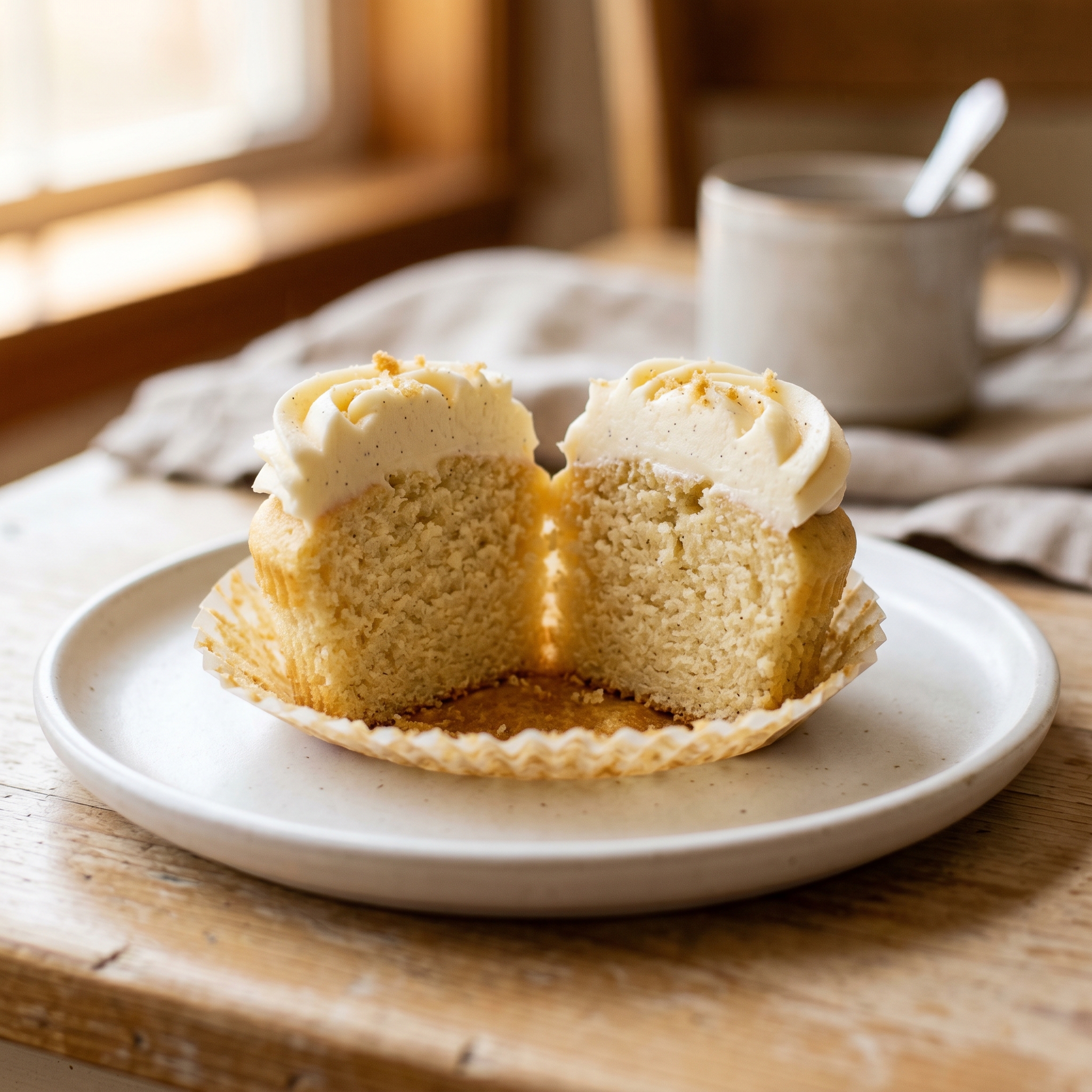
Pan Prep, Liner Fill Level, and Cooling Tips
Fill cupcake liners only halfway at altitude instead of the usual two-thirds. Batter expands more aggressively at lower pressure, and overfilling leads to mushroom tops that spill over the edge.
Let cupcakes cool in the pan for 5 minutes, then move them to a wire rack right away. Leaving them in the pan too long at altitude traps steam and makes the bottoms gummy.
- Fill liners 1/2 full, not 2/3 full
- Grease pan wells even when using liners, extra insurance against sticking
- Cool 5 minutes in pan, then transfer immediately to wire rack
- Frost only when completely cool, altitude-adjusted crumbs are more fragile warm
Eggs and Fat: Small Changes That Matter
Eggs provide structure, and at altitude you often need a little more. Add one extra egg yolk (not a whole egg) to recipes at 7,000 feet and above. The yolk adds richness and fat without too much extra liquid.
Oil-based cupcake recipes often perform better at altitude than butter-based ones. Oil coats gluten strands evenly and keeps the crumb moist even when moisture evaporates faster.
- Add 1 extra egg yolk above 7,000 ft
- Swap melted butter for neutral oil in recipes that keep drying out
- Room-temperature eggs emulsify better and create a more stable batter at any elevation
FAQ
Why do my cupcakes sink in the middle at high altitude?
The most common cause is too much leavening. At lower air pressure, baking powder and baking soda produce gas bubbles that expand faster than the batter can set. The cupcake rises fast, then collapses before the crumb firms up. Reduce your baking powder by 1/8 to 1/4 tsp per tsp and raise your oven temperature by 15 to 25 degrees F to set the structure faster.
Do I need special high-altitude flour?
No, you do not need a special flour. Regular all-purpose flour works fine. You just need to add 1 to 4 extra tablespoons per cup depending on your elevation. The extra flour adds the structure that lower air pressure takes away.
Can I use a sea-level cupcake recipe at altitude without any changes?
You can try, but expect problems above 3,500 feet. The most likely results are sinking centers, dry crumb, or overflow out of the liners. Even small adjustments, like reducing leavening by 1/8 tsp and adding 2 tablespoons of flour, make a big difference.
Does high altitude affect frosting too?
Yes, but less dramatically. Buttercream can feel softer at altitude because sugar reaches different temperatures at a lower boiling point. If you are making cooked frostings like Swiss meringue buttercream. Use a candy thermometer and adjust target temps down by about 2 degrees F per 1,000 feet of elevation.
My cupcakes taste dry even after adjustments. What am I missing?
Check your liquid and sugar first. Moisture evaporates faster at altitude, so adding 2 to 4 extra tablespoons of milk or buttermilk helps a lot. Reducing sugar slightly also keeps the crumb from over-browning on the outside before the inside is done. Adding an extra egg yolk above 7,000 feet adds fat and richness that fights dryness.