
How to Develop Your Own Signature Cupcake Flavor
By Sarah, Incr-EdibleCupCakes. Updated 2026-05-29.
Start with one main flavor, add one supporting note and one background note, then test in small batches. That simple plan helps you build a cupcake flavor people remember.
| Pairing type | Example | Best placement | Risk |
|---|---|---|---|
| Main + amplifier | Chocolate + espresso | Both in batter | Low |
| Main + contrast | Lemon + thyme | Lemon in batter, thyme in frosting | Medium |
| Main + tension | Strawberry + black pepper | Strawberry filling, pepper in batter | Medium-high |
| Main + bridge | Mango + cardamom + coconut | Mango and cardamom in batter, coconut frosting | Low |
| Main + savory accent | Brown butter + white miso | Both in batter, slightly less sugar | High |
Why Most Original Cupcake Flavors Fall Flat
The biggest mistake I see is throwing every exciting ingredient into one batter. Espresso, cardamom, brown butter, orange zest, all at once. Nothing stands out because everything fights.
Memorable cupcakes are focused. One clear main flavor, two or three supporting notes, and a structure that lets each one show up. This guide walks through the exact plan I use when I build something new.
Step 1: Choose Your Main Flavor
Your main flavor is what someone tastes in the first bite. Pick one clear ingredient or family: brown butter, mango, black sesame, Earl Grey, roasted pistachio. Not "tropical" or "cozy autumn". Those are moods, not flavors.
Smell your main flavor next to possible partners. Your nose is faster than your oven. If two things smell good together, they usually taste good together.
- Strong picks: brown butter, matcha, espresso, stone fruit, citrus zest, toasted nuts
- Weak picks: vanilla with a hint of everything (too safe to remember)
- Skip flavors that vanish in heat, like fresh cucumber
Step 2: Build Your Three-Part Flavor Plan
I use three roles: main flavor, supporting flavor, and background note. The supporting flavor makes the main flavor pop or adds contrast. The background note rounds everything out.
Example: brown butter as main, miso as supporting (salty, savory), vanilla as background. That is a full flavor combo. Keep the batter to three core flavors. Frosting and filling are separate layers.
- Lemon + lavender | Chocolate + smoked salt | Strawberry + balsamic
- Bridge notes that work almost anywhere: vanilla, honey, brown sugar, a pinch of cinnamon
- If you cannot name all three roles in one sentence, the idea is not clear enough yet
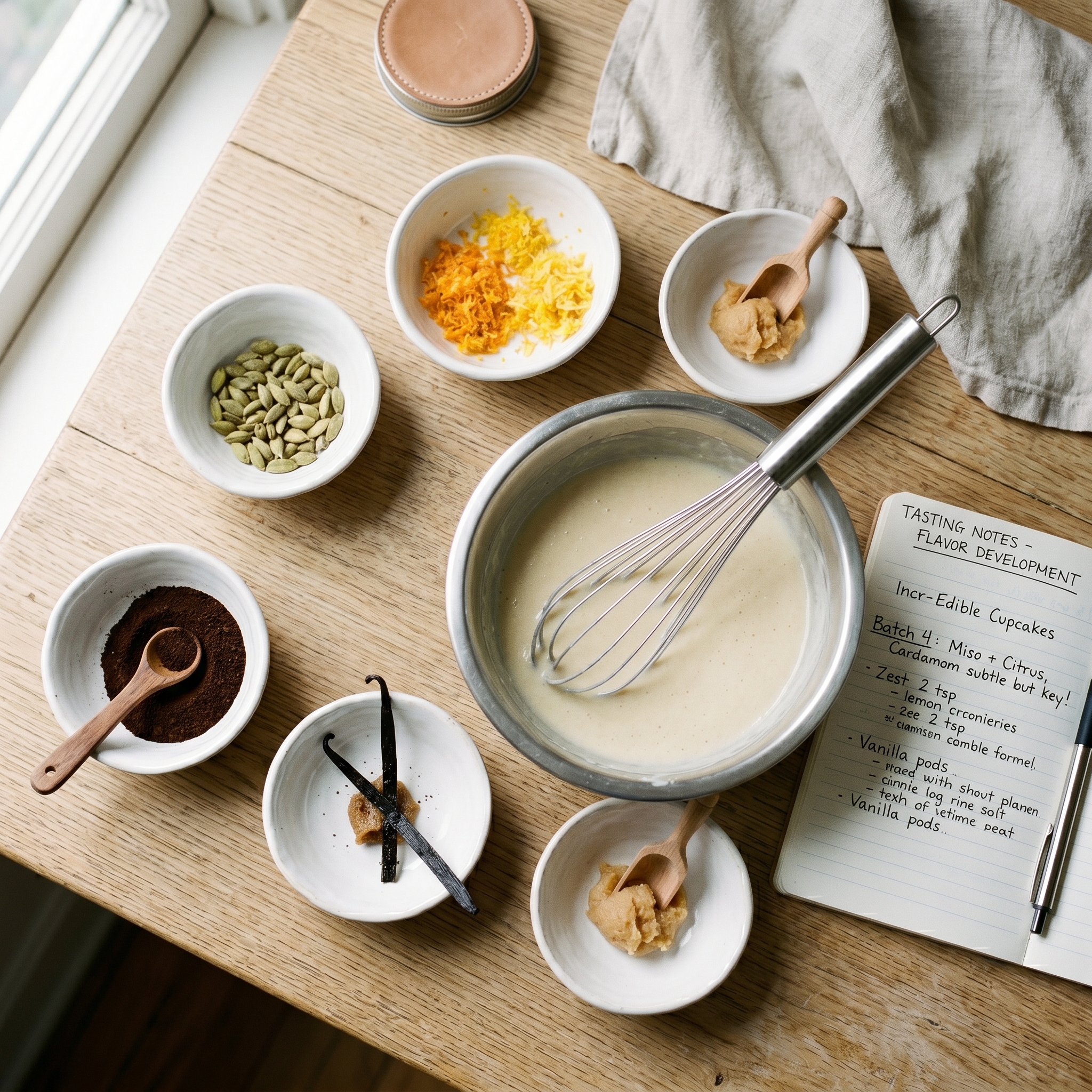
Step 3: Decide Where Each Flavor Lives
Not every flavor belongs in the batter. Delicate florals often fade in the oven. They work better in buttercream or a light syrup after baking. Spices and zests usually hold up in the cake.
Map each role to batter, frosting, filling, or garnish. Think about the bite in order: what hits first, what lingers, what surprises at the end.
- Batter: spices, extracts, nut butters, zests, brown butter, cocoa, matcha
- Frosting: florals, fruit reductions, cream cheese, citrus juice
- Filling: curds, jams, ganache, compotes
- Garnish: herbs, flaky salt, edible flowers, toasted nuts
Step 4: Test in Half-Batches and Take Notes
I never test a new idea in a full dozen. Six cupcakes let me compare two versions side by side without waste.
Write notes the moment the cupcake hits room temperature. Note aroma, first bite, middle taste, finish, and sweetness. Change one variable per batch. One. Not three at once.
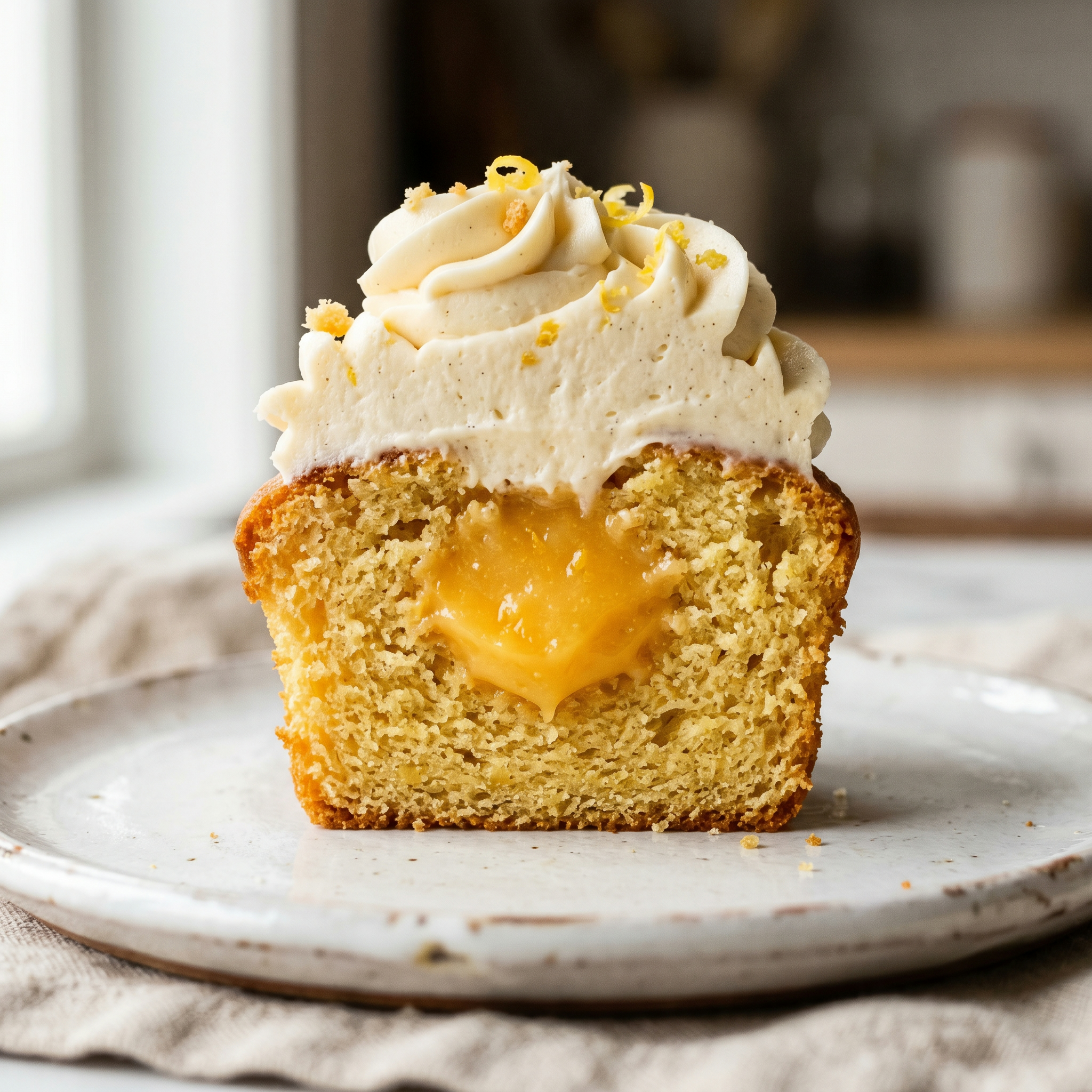
Step 5: Finalize and Write the Real Recipe
After two or three focused tests, write the recipe with exact amounts and technique notes. Then bake once more from the written version, as if you are a stranger reading it.
That validation batch tells you if the recipe is repeatable. If something fails, fix the instructions, not just the flavor in your head.
FAQ
How many test batches does it usually take?
Two to four half-batches is typical for a focused idea. If you are still unhappy after five, the main flavor may not work well in a baked cupcake. Step back and pick a new core flavor.
Can I use this plan to fix an existing recipe?
Yes. Name the main flavor your recipe is supposed to highlight. If that is unclear, the cupcake will taste flat. Often removing one random add-in makes the whole recipe click.
Can I use more than three flavors in the batter?
You can, but extra complexity usually works better across layers. Keep the batter focused. Put another note in frosting or filling so each part stays distinct.
How do I test an idea before baking?
Warm a little cream, stir in your proposed flavors, and taste. If it works in warm cream, it will usually work in a cupcake. This takes five minutes and saves a full batch.