
How to Fix Runny or Too Stiff Frosting
By Sarah, Incr-EdibleCupCakes. Updated 2026-08-26.
Fix runny frosting by adding powdered sugar in small amounts or chilling it briefly. Fix stiff frosting by beating in milk or cream one teaspoon at a time until it smooths out.
| Problem | Likely Cause | Fix |
|---|---|---|
| Frosting is runny | Butter too warm or too much liquid | Add powdered sugar 2 tbsp at a time, or chill 10 to 15 minutes |
| Frosting is too stiff | Butter too cold or too much sugar | Add warm milk or cream 1 tsp at a time |
| Frosting is grainy and stiff | Butter under mixed or too cold | Rest at room temperature 10 minutes, then rebeat |
| Frosting slumps after piping | Warm kitchen, butter fat softening | Chill piped cupcakes 10 minutes, do not remix |
Why Frosting Turns Runny or Stiff in the First Place
Frosting goes wrong because the ratio of fat, liquid, and powdered sugar gets out of balance. Butter that is too warm, extra vanilla, or a splash too much milk all push frosting toward runny.
On the other side, cold butter, too much powdered sugar, or skipping the liquid entirely makes frosting stiff and hard to spread. I have made both mistakes in my own kitchen, usually when I am rushing a batch before a party.
Kitchen temperature matters more than most recipes admit. A frosting that pipes perfectly at 68°F can slump within 20 minutes in a warm summer kitchen.
- Butter too soft or melted: causes runny frosting.
- Too much liquid (milk, cream, extract): causes runny frosting.
- Butter too cold or under mixed: causes stiff, chunky frosting.
- Too much powdered sugar: causes dry, stiff frosting.
How to Fix Runny Frosting
Fix runny frosting by adding powdered sugar in small batches, about 2 tablespoons at a time, mixing fully between additions. This thickens the frosting without making it taste chalky if you go slow.
If the frosting is only slightly loose, skip the sugar and chill the bowl in the fridge for 10 to 15 minutes instead. Cold butter firms up the whole mixture without changing the flavor at all.
For very runny frosting, especially cream cheese frosting, both problems may be happening together. Chill first, then add sugar only if it is still too soft to hold a peak.
- Add powdered sugar 2 tbsp at a time, beat 30 seconds between additions.
- Chill the bowl 10 to 15 minutes if it is only slightly loose.
- For cream cheese frosting, chill first before adding more sugar.
- Stop adding sugar once frosting holds a soft peak on the beater.
How to Fix Frosting That Is Too Stiff
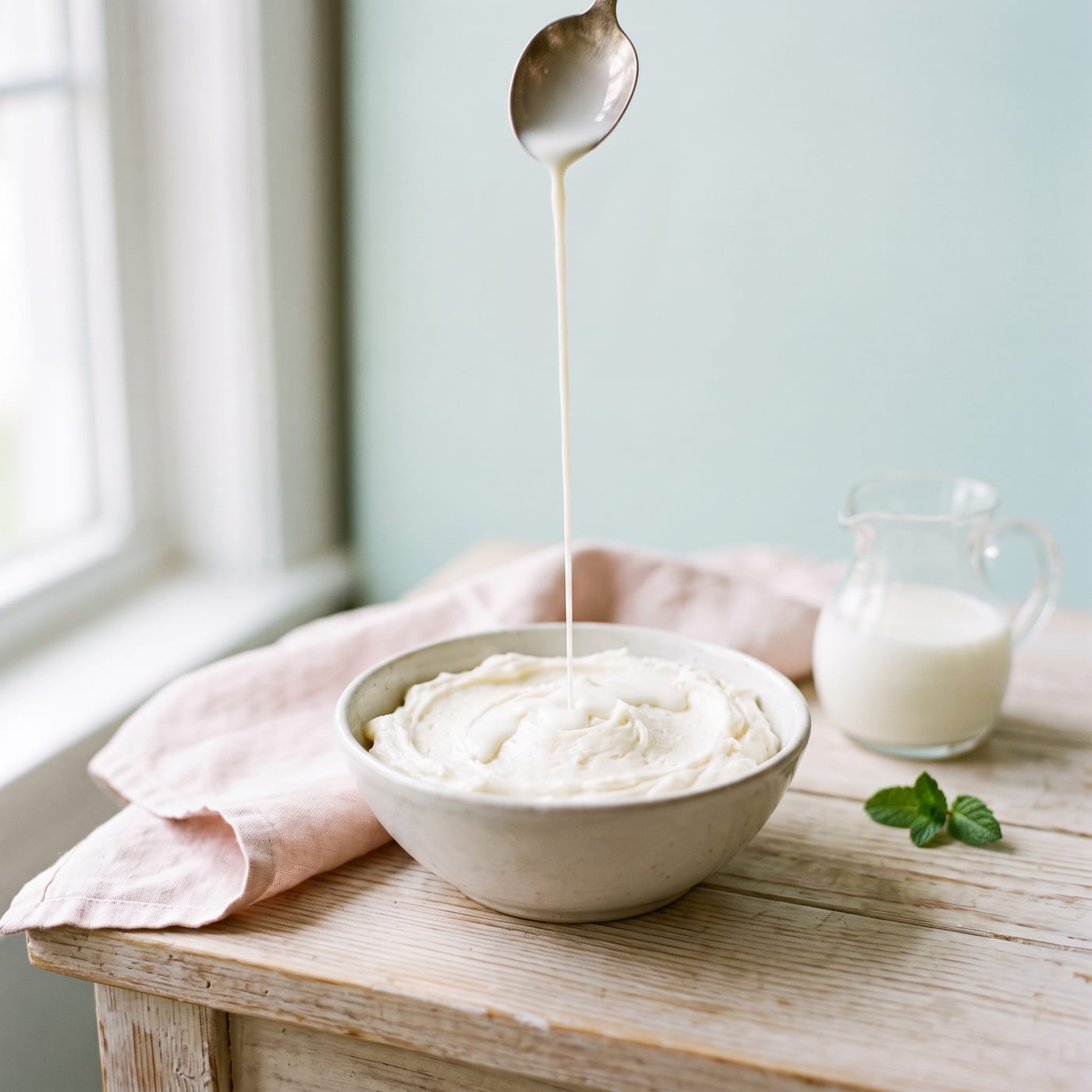
Fix stiff frosting by beating in milk or heavy cream one teaspoon at a time until it loosens. Add slowly because a stiff frosting can turn runny fast once liquid goes in.
If the frosting looks grainy or crumbly rather than just firm, the butter may have been too cold to start. Let the whole bowl sit at room temperature for 10 minutes, then beat again before adding any liquid.
Warm milk or cream works a little better than cold, since it blends in faster and needs less of it to soften the mix.
- Add milk or cream 1 tsp at a time, beating fully between each addition.
- Let overly cold, grainy frosting sit at room temperature 10 minutes first.
- Use warm liquid, not cold, so it blends in with less needed.
- Stop as soon as the frosting is smooth and spreadable.
Getting the Butter to Sugar Ratio Right From the Start
The most stable buttercream ratio is about 1 cup of butter to 3 to 4 cups of powdered sugar, with 2 to 3 tablespoons of liquid. Sticking close to this ratio prevents most runny or stiff problems before they start.
Butter should be soft enough to press a finger into easily, but not shiny or greasy looking. If your butter looks oily, it is too warm and will make the frosting slide instead of hold its shape.
I always add liquid last, and always in small splashes. It is much easier to add more than to fix frosting that has gone too thin.
- Base ratio: 1 cup butter, 3 to 4 cups powdered sugar, 2 to 3 tbsp liquid.
- Butter test: press with a finger, it should dent but not feel greasy.
- Add liquid last, in small splashes, never all at once.
- Beat the full batch at least 3 minutes for stable texture.

Weather, Storage, and Why Frosting Changes After Mixing
Frosting that was perfect an hour ago can loosen just from sitting in a warm room. Heat softens butter fat, and once it passes about 75°F the frosting starts to slump on its own.
If you piped cupcakes and the swirls are melting. Move them to the fridge for 10 minutes rather than remixing the whole batch. This often solves the problem without touching the ratio at all.
Frosting stored in the fridge overnight often turns stiff from the cold. Bring it back to room temperature and rebeat for a minute before using it again, rather than adding more liquid right away.
- Warm room: frosting softens and slumps, chill piped cupcakes 10 minutes.
- Cold storage: frosting stiffens, rebeat at room temperature before adding liquid.
- Humid kitchens absorb extra moisture, so add sugar in smaller steps.
- Always rebeat stored frosting for a minute before judging its texture.
FAQ
Why does my buttercream frosting go runny after I add food coloring?
Liquid food coloring adds extra moisture, which can thin frosting fast. Fix it the same way as any runny batch, adding powdered sugar 2 tablespoons at a time, or switch to gel food coloring next time since it adds almost no liquid.
Can I fix runny cream cheese frosting the same way as buttercream?
Mostly yes, but chill it first since cream cheese frosting often just needs to firm up in the cold. Add powdered sugar only if it is still too soft to hold a peak after 15 minutes in the fridge.
Is it better to fix stiff frosting with milk or heavy cream?
Heavy cream gives a slightly richer, more stable texture, while milk works fine for small fixes. Either works, just add it warm and in small amounts, one teaspoon at a time.
How much powdered sugar can I add before the frosting tastes too sweet?
Most frosting can handle up to 4 to 5 cups of powdered sugar total per cup of butter before it tastes overly sweet. If you are adding much more than that to fix runny frosting, the butter was likely too warm to start.