
How to Make Frosting Stable in Hot Weather
By Sarah, Incr-EdibleCupCakes. Updated 2026-08-22.
Stable hot weather frosting uses less liquid, more structure ingredients like shortening or cream cheese, and a cornstarch boost to hold its shape above 80°F.
| Frosting Type | Melting Point Behavior | Best Hot Weather Fix |
|---|---|---|
| All butter buttercream | Softens fast above 75F | Swap half the butter for shortening |
| Half shortening buttercream | Holds shape to 90F | Add cornstarch for extra insurance |
| Cream cheese frosting | Moderate hold, dairy safety limit | Use block cream cheese, chill before serving |
| Whipped cream frosting | Melts fastest, poor hot weather choice | Avoid for outdoor summer events |
Why Frosting Melts in Hot Weather
Frosting melts in hot weather because butter starts softening around 68°F and turns liquid near 90°F. Once that happens, the whole structure loses its grip and swirls sag or slide.
Powdered sugar frosting depends on fat holding its shape, so any fat with a low melting point is a risk in summer. Butter alone is the weak link, which is why bakers reach for shortening, cornstarch, or cream cheese to prop it up.
The Shortening Trick
Shortening keeps frosting stable because it has a much higher melting point than butter, around 117°F versus butter's 90°F. Swapping in shortening for half the butter gives you real heat resistance without losing all the flavor.
I tested this in my kitchen on a 95°F patio afternoon. Straight butter frosting slumped in 30 minutes, but a half butter half shortening batch held its swirl for over two hours in direct sun.
- Use 1/2 cup shortening plus 1/2 cup butter per standard batch
- Add butter flavor extract if using more than half shortening.
- Beat shortening in first to avoid a greasy texture.
- Skip shortening entirely below 75°F, butter alone works fine then.
Cornstarch for Extra Hold
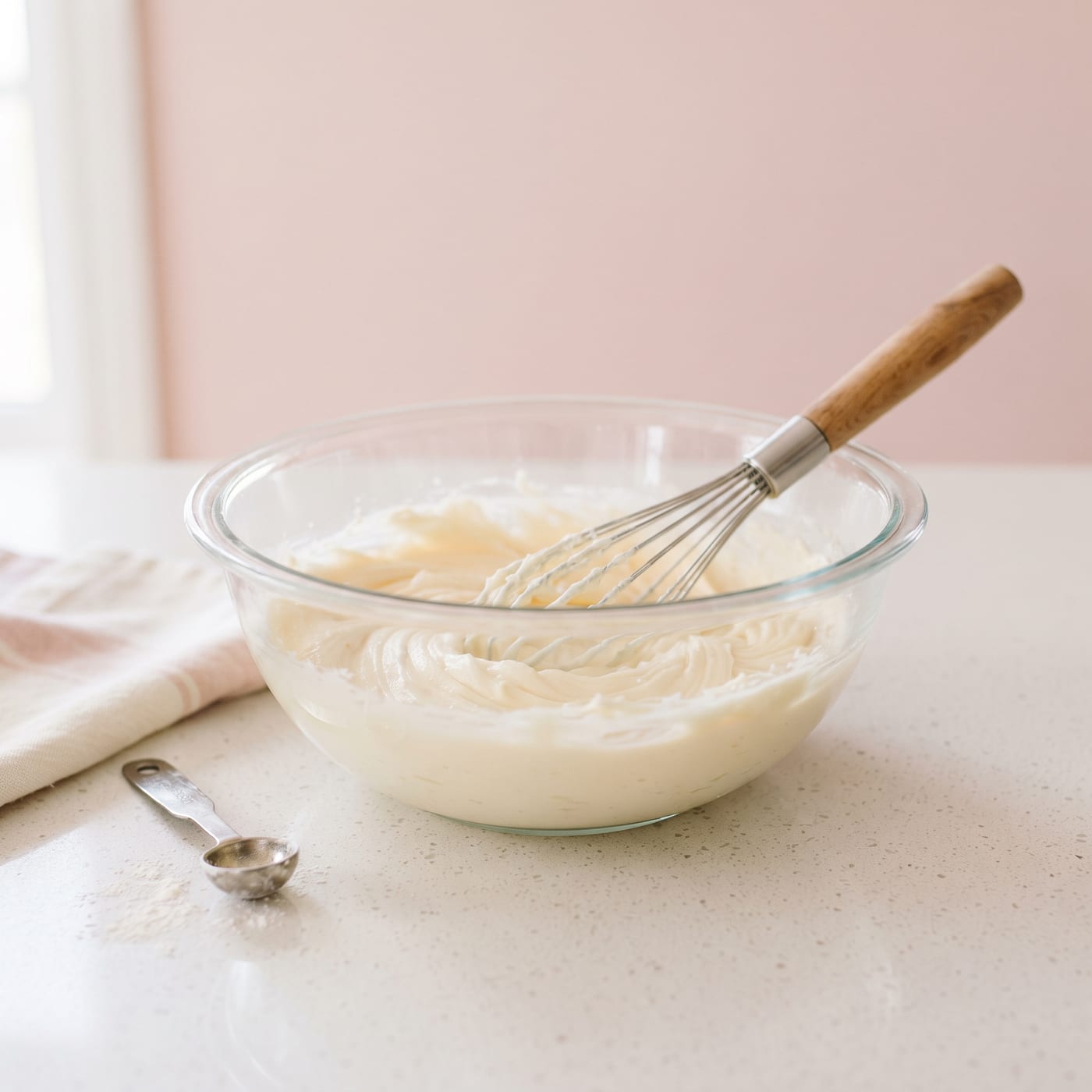
Cornstarch stabilizes frosting by absorbing extra moisture and thickening the mix without adding more sugar. It works like a starch based glue that keeps peaks standing firm even as temperatures climb.
Add it straight into the powdered sugar before mixing, so it blends evenly and does not clump. Two tablespoons per 4 cups of powdered sugar is enough for most buttercream recipes.
- Sift cornstarch with powdered sugar first.
- Do not exceed 3 tablespoons per 4 cups sugar, texture turns chalky.
- Works in both American buttercream and cream cheese frosting.
- Has no flavor impact when used in this small amount.
Cream Cheese Frosting in Heat
Cream cheese frosting can actually survive heat better than plain buttercream if you use full fat block cream cheese and less butter overall. The dense protein structure in cream cheese resists melting longer than butter fat alone.
Avoid the whipped tub cream cheese sold for spreading on bagels. It has extra water and air that make frosting runny fast, especially once it warms up on a table outdoors.
- Use 8 ounces full fat block cream cheese, cold from the fridge.
- Cut butter to 1/4 cup or less in the recipe
- Chill the frosted cupcakes 30 minutes before serving.
- Add 1 tablespoon cornstarch for extra insurance in high heat.
Piping and Serving Tips for Hot Days
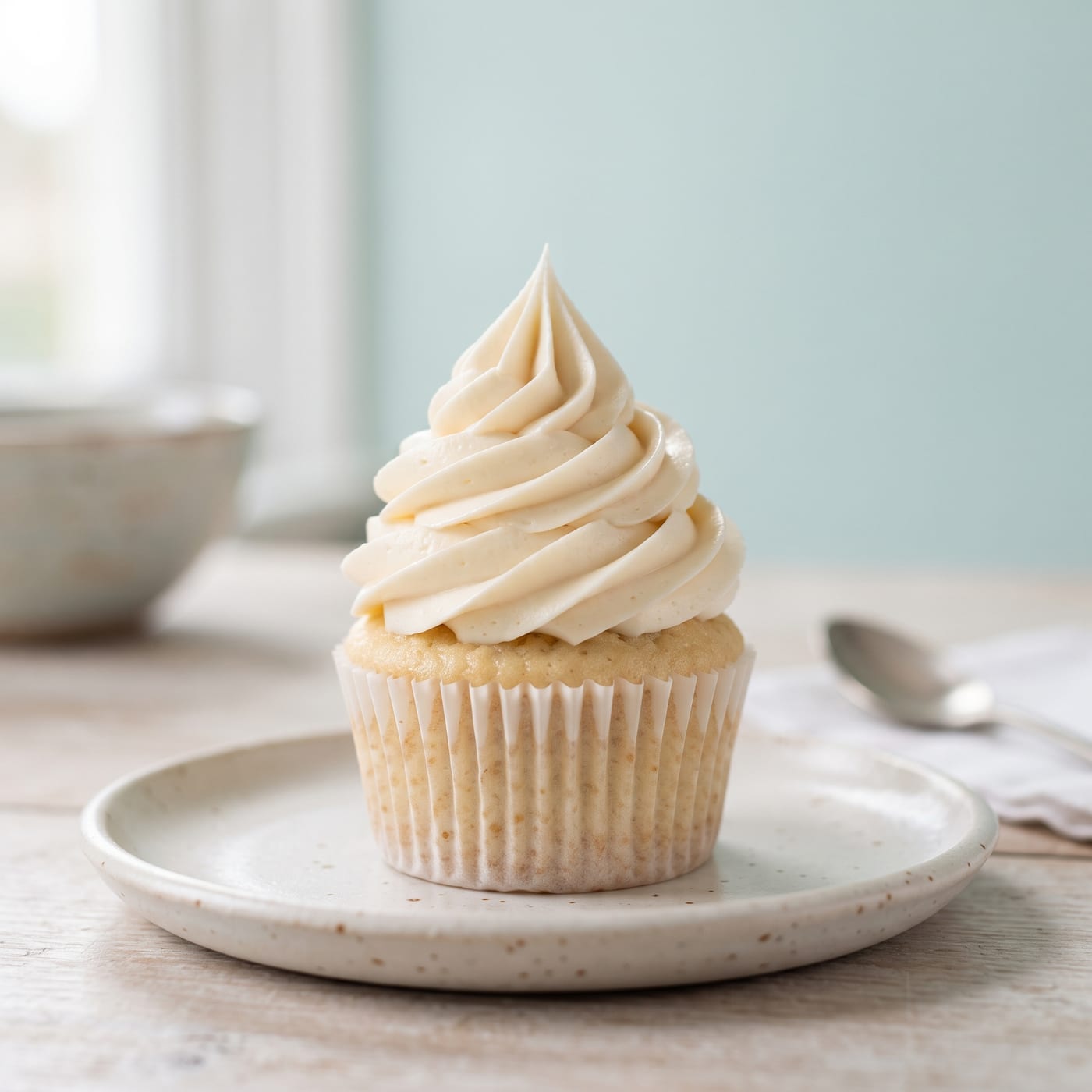
Keep frosting cool while you pipe by working in short batches and returning the bowl to the fridge between cupcakes. Warm hands and warm kitchens soften frosting fast, even before it ever sees outdoor heat.
Once piped, chill cupcakes for 20 minutes before any outdoor event. This sets the outer layer so it holds its shape longer once it hits warm air.
- Pipe in a cool room, ideally under 70°F.
- Chill piped cupcakes uncovered for 20 minutes before transport.
- Transport in a box with a cold pack, not loose in a bag.
- Serve from shade or an air conditioned spot when possible.
FAQ
How long can frosted cupcakes sit out in hot weather?
Stabilized frosting with shortening or cornstarch can hold up for 2 to 3 hours outdoors below 90°F. Above that, plan for shade, a cold pack, or serving in shorter windows.
Does cornstarch change the taste of frosting?
No, cornstarch is flavorless in the small amounts used for stability, around 2 tablespoons per batch. You will notice firmer texture, not any taste difference.
Can I use all shortening instead of butter?
You can, but pure shortening frosting tastes flat and greasy without butter for flavor. Half and half gives the best balance of hold and taste.
Is cream cheese frosting safe to leave out in summer?
Cream cheese frosting should not sit out more than 2 hours in heat above 80°F due to dairy safety limits. Keep it chilled until serving time and refrigerate leftovers promptly.