
The Science of a Moist Cupcake Crumb
By Sarah, Incr-EdibleCupCakes. Updated 2026-06-04.
Dry cupcakes almost always come down to the wrong ratio of fat, sugar, or liquid in your batter. Fix those three things and you will get a soft, tender crumb every single time.
| Ingredient Swap | What It Fixes | How Much to Use |
|---|---|---|
| Oil instead of butter | Crumb stays moist longer | Replace 50-100% of butter with neutral oil |
| Brown sugar for white sugar | More moisture retention in crumb | Swap 50% of white sugar for packed brown sugar |
| Sour cream or Greek yogurt | Adds fat and acid, tenderizes crumb | 2 tbsp per 12 cupcakes |
| Buttermilk for regular milk | Reacts with baking soda for soft open crumb | Use 1:1 in place of whole milk |
| Cake flour for all-purpose flour | Less gluten, finer and softer texture | Substitute 1:1 by weight |
Why Are My Cupcakes Dry? The Short Answer
Dry cupcakes happen when fat, sugar, or liquid is too low relative to the flour in your recipe. Even one ingredient out of balance can make your crumb feel crumbly and tight instead of soft and springy.
The good news is that moisture problems are almost always fixable. Once you understand what each ingredient does, you can spot the problem in any recipe before you even turn on the oven.
How Fat Controls Tenderness in the Crumb
Fat coats the flour proteins and stops them from forming too much gluten. Which is what makes a crumb tender instead of chewy or dry. Less fat means more gluten development and a tighter, drier texture.
Butter and oil both add fat, but they behave differently. Butter is about 80% fat and 20% water, so some of that water evaporates in the oven. Oil is 100% fat, so it keeps the crumb wetter and softer even the next day.
- Butter: rich flavor, slightly firmer crumb, best eaten same day
- Oil (neutral): neutral flavor, softer crumb, stays moist longer
- Oil + butter blend: good balance of flavor and staying power
- Brown butter: nutty flavor, slightly less moisture than plain butter
What Sugar Does Beyond Sweetness
Sugar pulls water into itself and holds it there, which is called hygroscopy, and that is exactly what keeps your crumb soft. Cut too much sugar and the cupcake loses that built-in moisture retention.
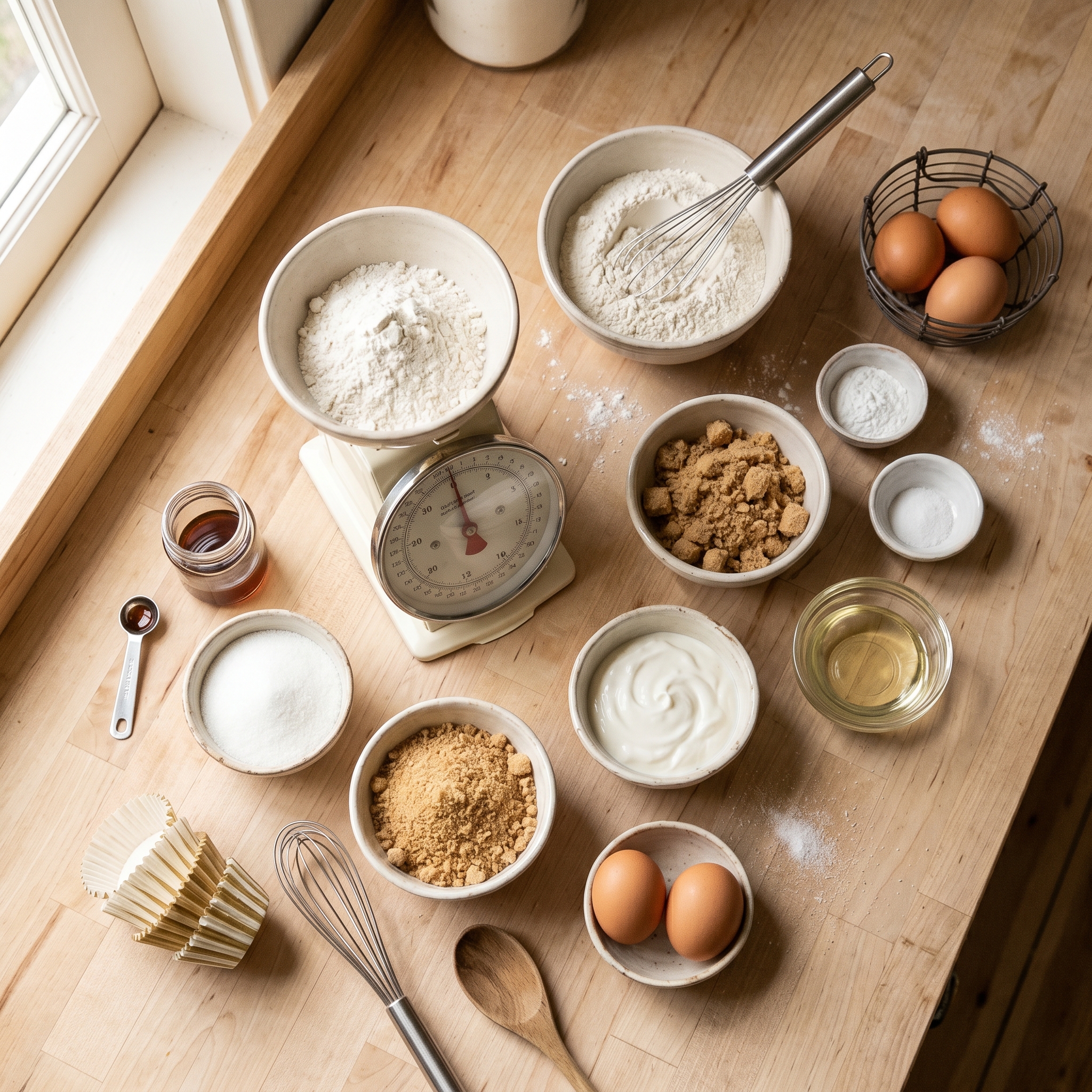
Brown sugar contains molasses, which holds even more water than plain white sugar. Swapping half your white sugar for brown sugar is one of the easiest ways to fix a dry recipe without changing anything else.
- White sugar: standard sweetness, less moisture retention
- Brown sugar (light or dark): more moisture, slight caramel note
- Honey or maple syrup: liquid sugars that add extra moisture, reduce other liquids by 2 tbsp per 1/4 cup used
- Powdered sugar: absorbs fast, best for frostings, not batter
Liquid Ratios and the Role of Dairy
Liquid hydrates the starch in flour and creates steam in the oven. And that steam is part of what makes the crumb feel soft rather than dense. Too little liquid and the starch stays dry and powdery.
Not all liquids work the same way. Full-fat dairy like buttermilk, sour cream, or whole milk adds both moisture and fat, which double the benefit. Water adds moisture but no fat, so the crumb can feel thinner in texture.
- Buttermilk: acidic, reacts with baking soda, very soft crumb
- Sour cream: thick, high fat, excellent for dense moist texture
- Whole milk: balanced, easy to use, reliable moisture
- Water or plant milk: lighter crumb, less richness
- Heavy cream: high fat, rich crumb, use in smaller amounts
Flour Measurement and Gluten: The Hidden Culprit
Too much flour is the single most common reason home bakers end up with dry cupcakes. And it usually happens when you scoop flour directly with a measuring cup. That method packs the flour and can add 20-30% more than the recipe needs.
The fix is simple: spoon flour into the cup and level it off, or better yet, use a kitchen scale. Cake flour also absorbs less water than all-purpose flour, so it gives you a softer, more tender crumb with the same recipe.
- Spoon and level method: reduces overpacking significantly
- Kitchen scale: most accurate, use grams if possible
- Cake flour vs all-purpose: cake flour has less protein, less gluten, softer result
- Sifting: helps with lumps but does not replace proper measuring
Baking Time and Temperature: How Overbaking Dries Cupcakes Out
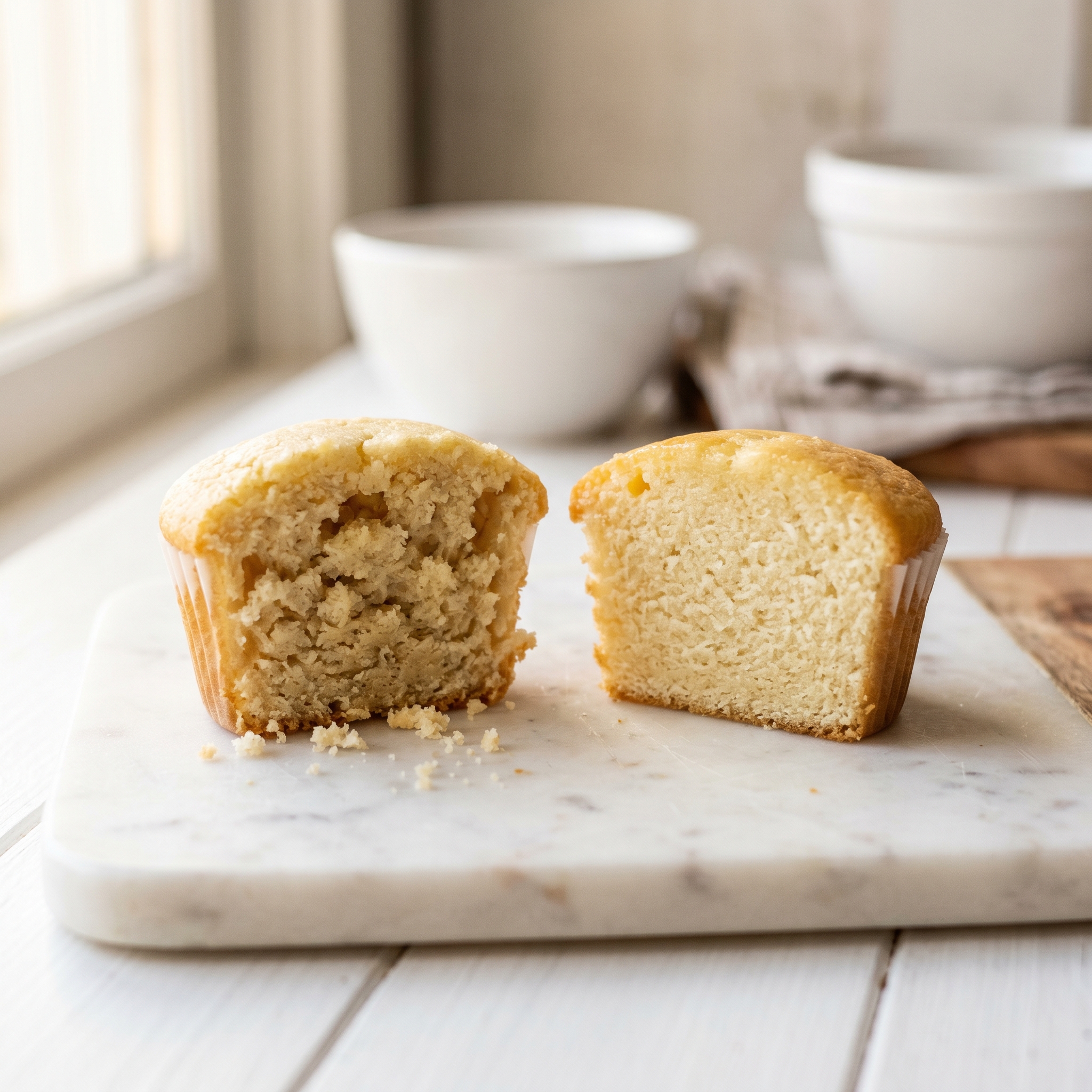
Even a perfectly balanced batter turns dry if the cupcakes spend too long in the oven. Heat drives out moisture, and once it is gone, no amount of frosting brings it back.
Start checking cupcakes at the early end of the time range your recipe gives. A toothpick with a few moist crumbs is the right signal to pull them out. Wait until the toothpick comes out completely clean and they are likely already overbaked.
- 325F convection: even baking, good for tall domed cupcakes
- 350F standard: most common, reliable for standard recipes
- 375F: faster rise but watch closely after 14 minutes
- Internal temp target: 210-212F for a fully baked but still moist crumb
- Always rotate the pan at the halfway point for even heat
FAQ
Can I fix a dry cupcake recipe without rewriting it completely?
Yes. Start with two small changes: swap half the white sugar for brown sugar. And add 2 tablespoons of sour cream to the batter. Those two tweaks fix most dry cupcake recipes without touching the structure of the recipe.
Does using oil instead of butter actually make a noticeable difference?
It does, especially on day two. Oil is 100% fat so it keeps the crumb wetter for longer than butter, which contains water that bakes off. If you want flavor without dryness, try a 50/50 split of melted butter and a neutral oil.
My recipe looks right on paper but the cupcakes are still dry. What am I missing?
The most likely cause is too much flour from scooping instead of spooning, or a few extra minutes in the oven. Try weighing your flour and pulling the cupcakes out when the toothpick still has a couple of moist crumbs on it.
Does cake flour really make a softer crumb than all-purpose flour?
Yes, because cake flour has less protein (around 7-9% versus 10-12% in all-purpose), which means less gluten forms during mixing. The result is a finer, softer crumb. You can substitute it 1:1 by weight in most cupcake recipes.
Is it possible to add moisture back into already-baked dry cupcakes?
A little, but not much. Brushing the tops with a simple syrup (equal parts sugar and water, heated until dissolved) adds surface moisture. Covering them tightly overnight also helps. But the better fix is always in the batter, not after baking.