
Why Do Cupcakes Crack on Top?
By Sarah, Incr-EdibleCupCakes. Updated 2026-08-25.
Cupcakes crack on top when the oven is too hot or the batter has too much leavening, so the outside sets before the inside finishes rising and pushes through.
| Cause | What You See | Fix |
|---|---|---|
| Oven too hot | Deep crack, hard domed top | Lower to 325-350°F, use thermometer |
| Too much baking powder | Big dome, crack, bitter taste | Measure level teaspoons, check recipe |
| Old leavening | Uneven rise, weak crack | Test freshness, replace if flat |
| Dark metal pan | Crack plus darker sides | Lower oven temp 15 degrees |
What Causes Cracked Cupcake Tops
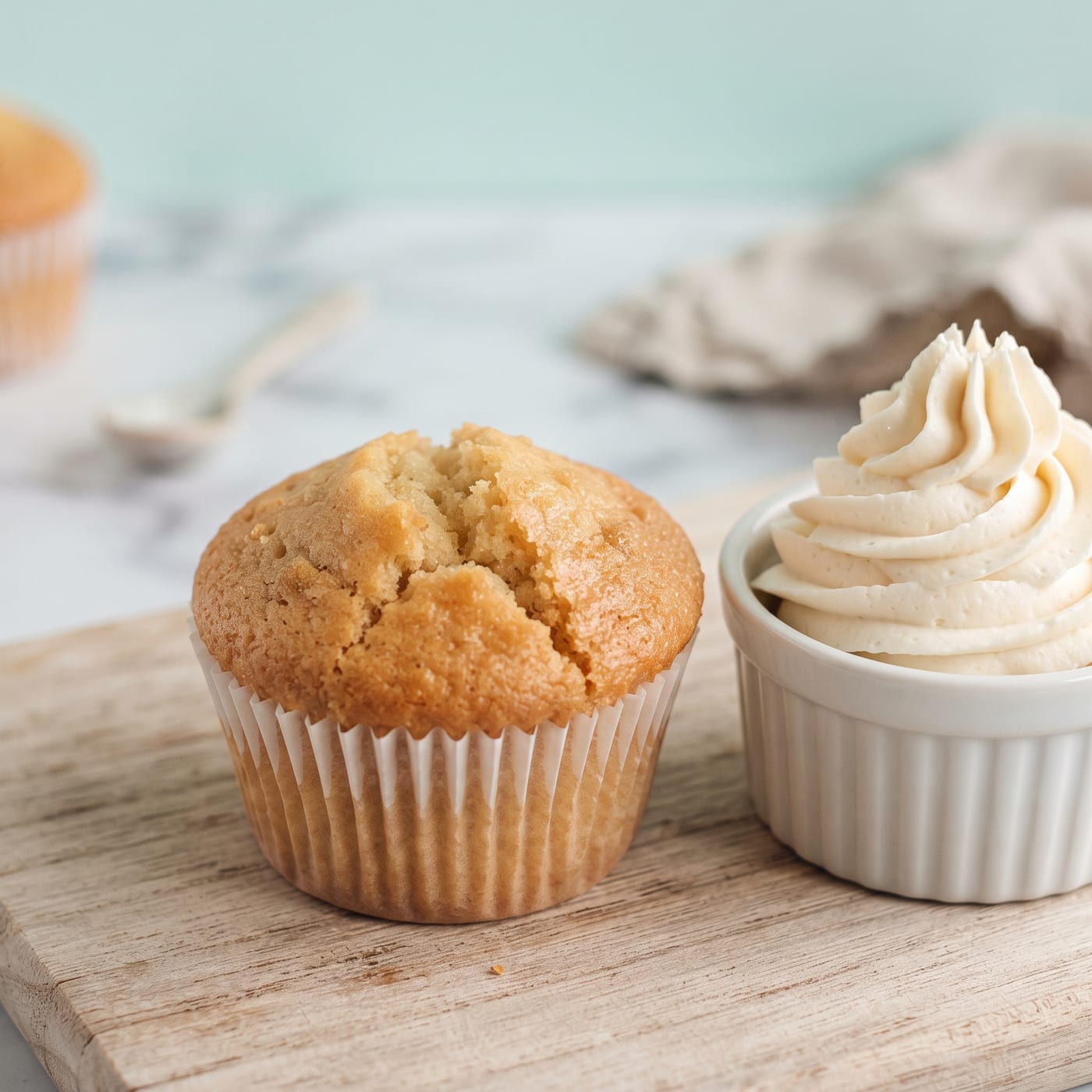
Cupcakes crack on top mainly from too much heat or too much leavening. Both of which make the batter rise too fast on the outside edges.
When the outer crust sets before the center finishes expanding, the batter underneath keeps pushing up and breaks through the surface.
I tested this in my home kitchen with the same batter at two oven temps. The 375°F batch cracked every time, the 325°F batch stayed smooth.
The Role Of Oven Heat
A too hot oven bakes the outside of the cupcake before the inside has a chance to catch up, and that gap is what splits the top.
Most home ovens run hotter than the dial says, sometimes by 25 degrees or more. That hidden heat spike is a common hidden cause of cracking.
High heat also dries the surface fast, forming a thin crust early. Once that crust sets, it has nowhere to go but crack when the middle keeps rising.
Too Much Leavening Makes It Worse
Extra baking powder or soda creates gas faster than the batter structure can hold it, so the top domes hard and splits.
A little leavening lifts cupcakes gently. Too much creates big bubbles that rise fast, stretch the crust, and crack once the outside firms up.
This is why doubling baking powder by accident, even by half a teaspoon, can turn a smooth batch into a cracked one.
How Heat And Leavening Work Together
Cracking usually happens when both problems overlap: hot oven plus strong leavening pushes the batter up fast while the crust sets fast too.
Think of it like a balloon inflating inside a shell that is hardening in real time. The gas needs room, the shell has none, so it splits.
Fixing just one factor often helps, but fixing both gives the smoothest, most reliable tops.
Oven Adjustments That Fix Cracking
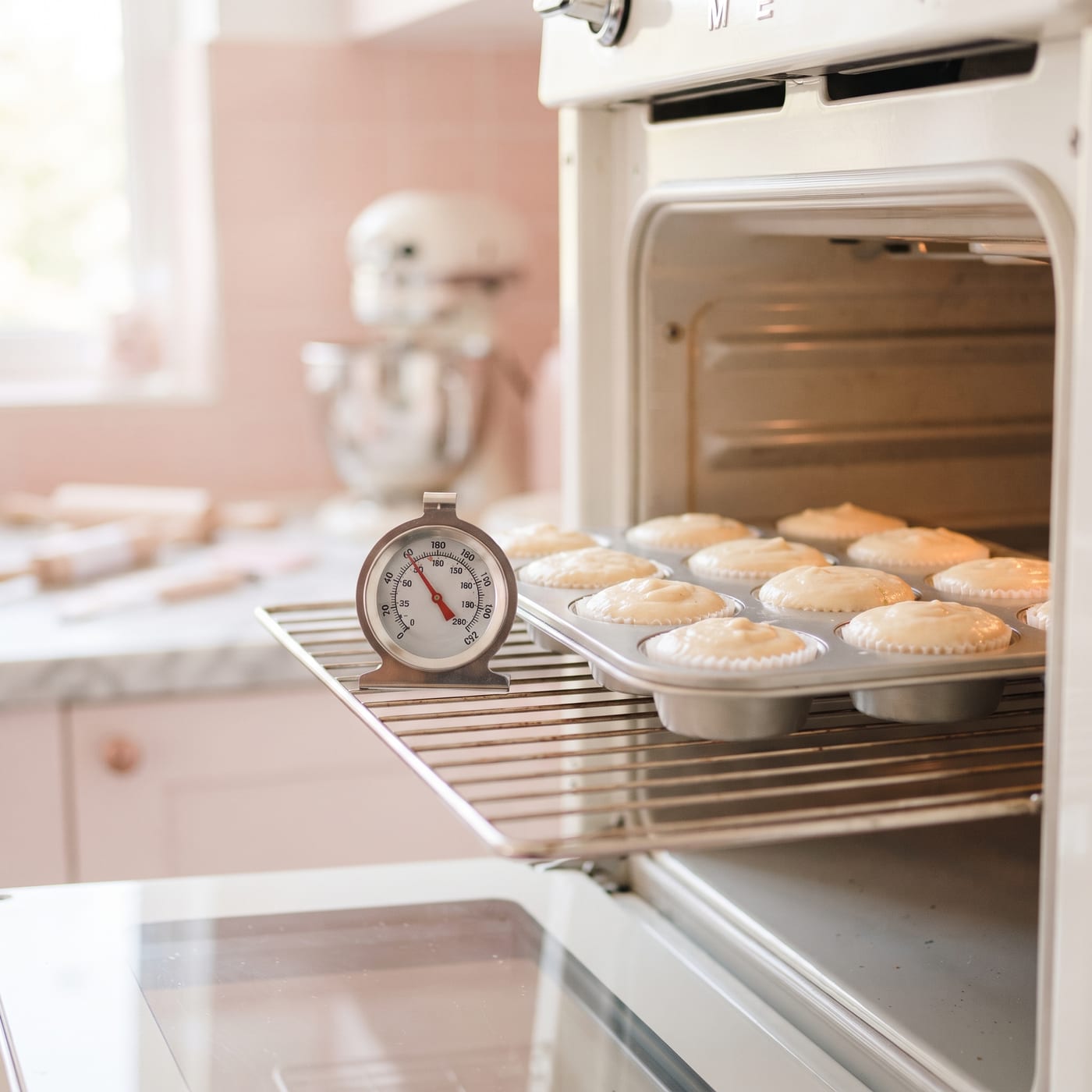
Lowering your oven temperature and confirming it with a thermometer solves most cracking problems within one or two test batches.
I keep a $6 oven thermometer clipped to my center rack. It caught my oven running 20 degrees hot, which explained months of domed, cracked cupcakes.
Small oven changes make a big difference here, since cupcakes are small and react fast to temperature swings.
- Bake at 325-350°F instead of 375°F or higher.
- Use an oven thermometer, not just the built in dial.
- Bake on the center rack for even airflow.
- Rotate the pan halfway through if your oven has hot spots.
- Avoid convection fan settings unless your recipe is written for it.
Getting Leavening Right
Measuring baking powder and soda exactly, and checking they are fresh, prevents the gas overload that cracks cupcake tops.
Old baking powder loses power, which tempts bakers to add extra scoops. That extra scoop is often the real problem, not the recipe.
Stick to level teaspoons, spoon and level flour too, since dense flour measuring can throw off the leavening to liquid ratio.
- Use level teaspoons, not heaping ones.
- Test baking powder freshness in warm water, it should fizz strongly.
- Do not substitute baking soda for baking powder without adjusting acid.
- Whisk dry ingredients well so leavening spreads evenly through the batter.
FAQ
Are cracked top cupcakes still safe to eat?
Yes, cracked tops are a texture and looks issue, not a safety issue. The cupcakes are still fully baked and safe once they pass the toothpick test.
Does altitude cause cupcakes to crack on top?
High altitude can make cracking worse because lower air pressure lets gas expand faster. If you bake above 3000 feet, reduce leavening slightly and lower oven temp by 25 degrees.
Will a dark or light cupcake pan change cracking?
Dark pans absorb more heat and can crack tops faster than light pans. If you only own dark pans, lower your oven temp by about 15 degrees to compensate.
Can frosting hide a cracked cupcake top?
Yes, a swirl of frosting piped high easily covers a cracked top. Fixing the cause still matters if you want a taller, more even rise for the frosting to sit on.