
How to Convert Recipes to Dairy-Free
By Sarah, Incr-EdibleCupCakes. Updated 2026-09-12.
Swap butter for vegan block butter, milk for full fat oat milk, and buttermilk for oat milk plus vinegar. Match fat content closely and your cupcakes bake up just as tender as the original.
| Original Ingredient | Dairy-Free Swap | Ratio |
|---|---|---|
| Butter | Vegan block butter | 1 to 1 by weight |
| Whole milk | Full fat oat milk | 1 to 1 |
| Buttermilk | Oat milk plus vinegar | 1 cup plus 1 tbsp vinegar |
| Heavy cream | Chilled coconut cream | 1 to 1 |
| Cream cheese | Dairy-free cream cheese | 1 to 1 |
Why Dairy-Free Conversion Trips Up Home Bakers
Most cupcake recipes fail dairy-free swaps because bakers pick low-fat substitutes for high-fat ingredients. Butter is about 80 percent fat, so a thin almond milk swap leaves the batter dry and crumbly.
I tested this in my own kitchen with a dozen batches. The recipes that held up used substitutes matched in fat and thickness, not just labeled dairy-free.
- Match fat percentage, not just the dairy-free label.
- Match liquid thickness, especially for buttermilk recipes.
- Check for hidden dairy in mix-ins like chocolate chips.
Best Butter Substitute for Cupcakes
Vegan block butter, the kind sold in sticks, is the closest match to dairy butter in both fat and structure. It creams the same way, traps air the same way, and holds its shape when piped into frosting.
Avoid tub margarine or spreadable vegan butter for baking. Those have extra water added for spreadability, which throws off your batter's moisture and can make cupcakes gummy in the center.
- Use vegan block butter, not tub spread, for creaming.
- Keep it cold for frosting, room temp for batter.
- Swap 1 to 1 by weight, not by volume.
Choosing the Right Milk Substitute
Full fat oat milk is my go to for converting milk in cupcake batter. It has a neutral flavor and a body close to whole milk, so it does not thin out your batter.
Almond and rice milk are thinner and lower in fat, which can make cakes fall flat on top. If you only have almond milk, add one extra tablespoon per cup to make up for the missing fat.
- Full fat oat milk: best all around swap for whole milk.
- Soy milk: good protein content, helps structure.
- Almond or rice milk: thin, needs extra fat added.
- Coconut milk from a can: rich, but adds coconut flavor.
How to Replace Buttermilk in Dairy-Free Baking
Mix one cup of oat milk with one tablespoon of white vinegar or lemon juice, then let it sit for five minutes. It curdles slightly, just like real buttermilk, and gives your cupcakes the same tender crumb and gentle tang.
This trick works because the acid reacts with baking soda in the recipe, helping cakes rise properly. Skip the acid and your cupcakes may turn out dense, even if the fat content is right.
- 1 cup oat milk plus 1 tbsp vinegar or lemon juice.
- Let sit 5 minutes before using.
- Works in any recipe that calls for buttermilk.
Using Coconut Cream for Rich Frostings and Fillings
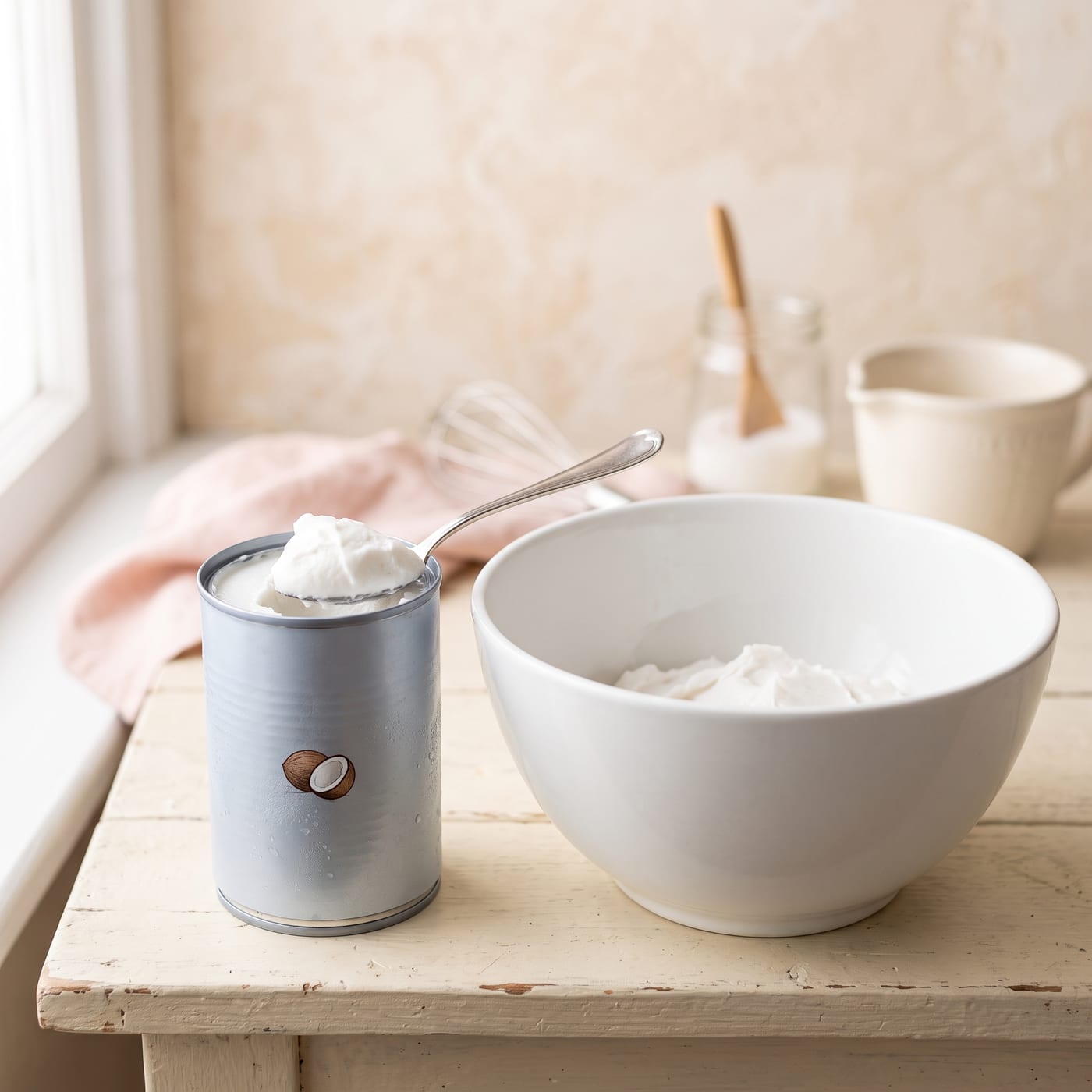
Full fat coconut cream, chilled overnight, whips up thick enough to replace heavy cream in frostings and fillings. Scoop only the solid cream off the top of the can and leave the watery liquid behind.
Coconut cream does carry a mild coconut flavor, so it works best in chocolate, vanilla, or tropical flavored cupcakes. For a neutral frosting, pair it with vegan butter to soften the coconut taste.
- Chill the can for at least 8 hours before opening.
- Scoop only the firm cream layer, not the liquid.
- Combine with vegan butter to mellow coconut flavor.
Common Mistakes When Converting Recipes
The biggest mistake is swapping ingredients one at a time without checking the whole recipe for balance. If you switch to a thinner milk and skip the acid in buttermilk swaps. Your cupcakes can end up flat and dense at once.
The second mistake is trusting labels without checking ingredient lists. Some chocolate chips, caramel bits, and sprinkles list milk powder or whey as a hidden ingredient.
- Recheck the full recipe after each swap, not just one ingredient.
- Read labels on chocolate chips, caramel, and sprinkles.
- Test a small batch before converting your whole recipe.
FAQ
Can I use almond milk instead of oat milk in dairy-free cupcakes?
Yes, but almond milk is thinner and lower in fat than oat milk. Add an extra tablespoon per cup to help keep your cupcakes moist.
Does coconut cream make cupcakes taste like coconut?
Full fat coconut cream carries a mild coconut flavor. It blends well into chocolate or vanilla frostings, especially when mixed with vegan butter to soften the taste.
Is vegan butter the same as margarine for baking?
No, most tub margarine has extra water for spreadability. Use a vegan block butter, sold in stick form, for creaming and piping.
How do I make dairy-free buttermilk for cupcakes?
Mix 1 cup of oat milk with 1 tablespoon of white vinegar or lemon juice. Let it sit 5 minutes until it thickens slightly before using.
Do I need to change the bake time for dairy-free cupcakes?
Usually not, but check at the original bake time and add 1 to 2 minutes if a toothpick comes out wet. Thicker substitutes like coconut cream can slow baking slightly.