
How to Fill Cupcakes with Cores and Curds Without Sogginess
By Sarah, Incr-EdibleCupCakes. Updated 2026-06-06.
To fill cupcakes without sogginess, core them after they are fully cooled. Seal the crumb with a thin layer of buttercream before adding wet fillings, and pipe or spoon the filling just before frosting. Timing and moisture barriers are the two things that make the biggest difference.
| Filling Type | Moisture Level | Barrier Needed? | Max Fill-Ahead Time |
|---|---|---|---|
| Lemon or lime curd | High | Yes, always | 3 hours (6 to 8 with barrier) |
| Fruit jam or compote | High | Yes | 2 to 3 hours |
| Pastry cream | Medium | Recommended | 6 hours refrigerated |
| Salted caramel (thick) | Medium | Recommended | 6 hours refrigerated |
| Nutella or cookie butter | Low | No | Up to 24 hours |
| Chocolate ganache (firm) | Low | No | Up to 24 hours |
| Whipped cream | High | Yes | Serve immediately |
Why Filled Cupcakes Go Soggy (and What Actually Causes It)
Sogginess happens when moisture from the filling moves into the crumb over time. Wet fillings like lemon curd or fruit jam release water as they sit, and an unsealed core absorbs it like a sponge.
Two things speed this up: filling a warm cupcake (steam opens the crumb structure) and using a very loose or runny filling with no barrier between it and the cake.
Once you understand the cause, the fix is straightforward. You need to control moisture transfer with timing, temperature, and a physical barrier.
- Warm crumb + wet filling = fast sogginess
- Runny fillings with no barrier migrate outward within 1 to 2 hours
- Airtight storage traps condensation and speeds breakdown
- Over-coring (too wide or too deep) leaves too much exposed crumb
Choosing the Right Coring Tool
The best coring tool makes a clean, even hole without tearing the crumb. I have tested four options in my kitchen and each has a real trade-off.
A cupcake corer (a purpose-made plastic or metal plunger) gives the most consistent results. It cuts a neat cylinder about 3/4 inch wide and keeps the plug intact for reuse as a cap.
- Cupcake corer: cleanest cut, plug stays whole, best for batch baking
- Apple corer: works well but slightly too wide for standard cupcakes
- Round piping tip (1A or 2A): great for small clean holes, less depth control
- Knife and spoon: messy, uneven walls, higher risk of sogginess from rough crumb
Step-by-Step: How to Core a Cupcake Correctly
Coring correctly takes about 30 seconds per cupcake once you have the right tool and the cupcakes are cold. Rushing this step while the cupcakes are still warm is the single most common mistake.
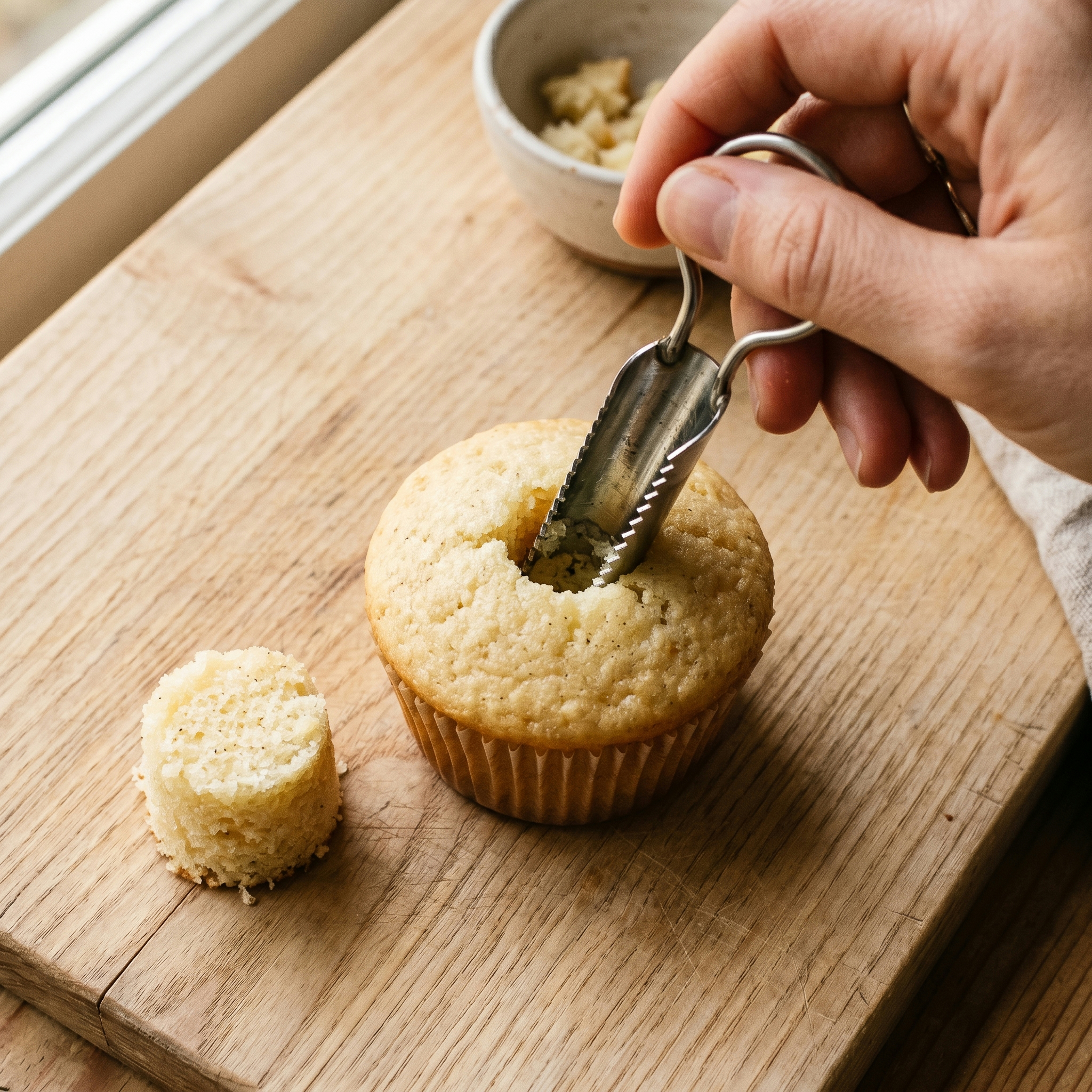
Press the corer straight down into the center, stopping about 1/4 inch from the bottom. Twist slightly as you pull it back up, and the plug should come out cleanly.
- Wait until cupcakes are fully cool, at room temperature or chilled
- Press the corer straight down into the center of the cupcake
- Stop 1/4 inch from the base so the bottom stays intact
- Twist gently and pull up to remove the crumb plug in one piece
- Set plugs aside on a tray so you can use them as caps
- Work in batches: core all, then fill all, then cap and frost
The Moisture Barrier: How to Seal Before You Fill
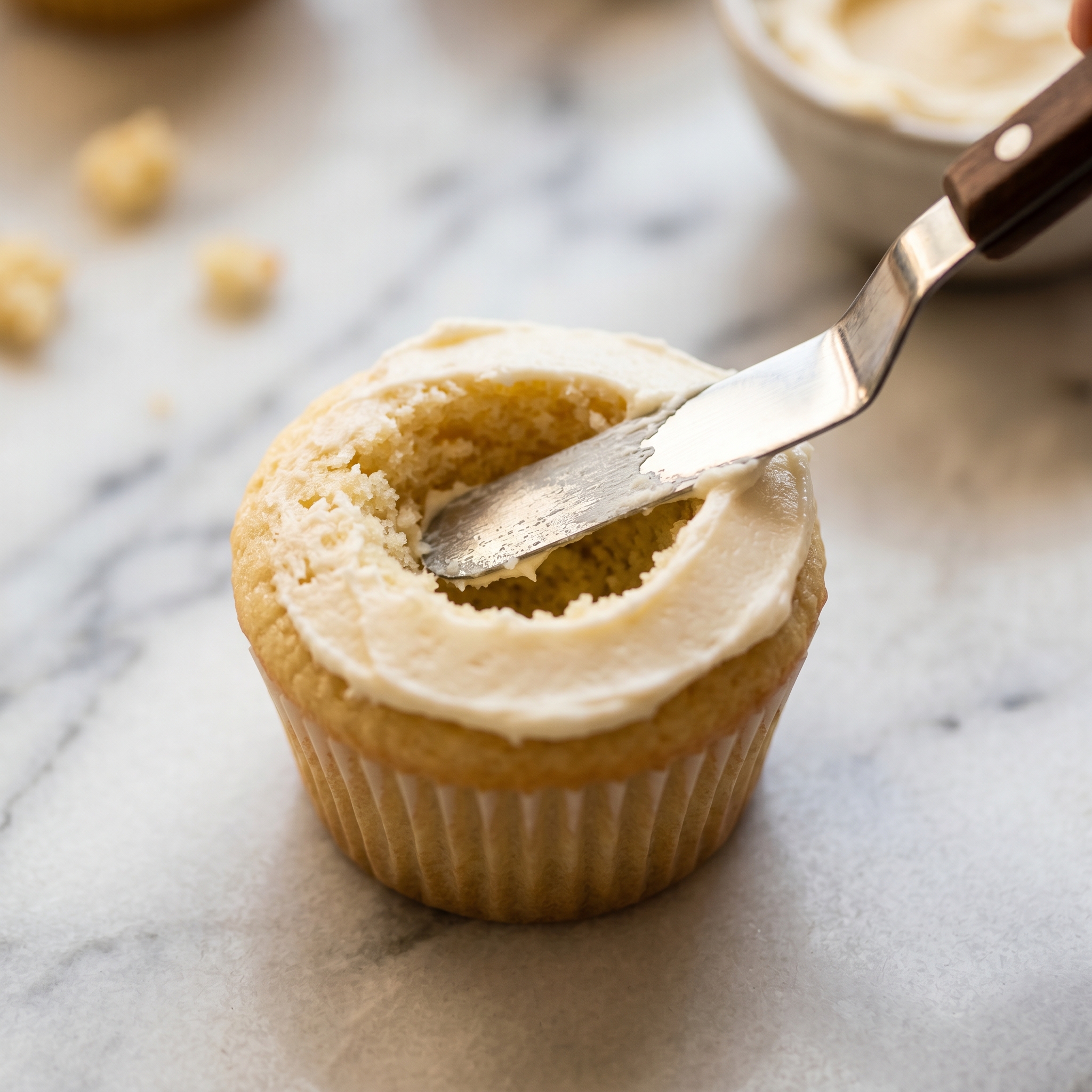
A moisture barrier is a thin coat of fat-based spread inside the core that slows water migration from the filling into the crumb. I use a small offset spatula or the back of a spoon to swipe a thin layer of buttercream around the inside walls of the hole.
Melted white chocolate works even better for very wet fillings like lemon curd or passion fruit curd. Brush a thin coat inside the core, let it set for 5 minutes, then fill.
This one step extends the life of a filled cupcake from 1 to 2 hours up to 6 to 8 hours without noticeable texture loss.
- American or Swiss meringue buttercream: easy barrier, good for most fillings
- Melted white chocolate (cooled): best barrier for curds and fruit fillings
- Ganache: works well for chocolate cupcakes with fruit or cream fillings
- Plain butter (softened): minimal protection, use only as a last resort
Filling Types and Timing: What Works When
Not all fillings behave the same way. Thicker fillings like pastry cream or Nutella stay put longer; thin ones like lemon curd or compote need a sealed core and a shorter window between filling and serving.
Fill cupcakes as close to serving time as possible, ideally within 2 to 3 hours. If you need to prep ahead, fill and refrigerate uncovered for up to 8 hours, then frost just before serving.
- Lemon or lime curd: high moisture, always seal core first, fill within 3 hours
- Pastry cream: medium moisture, seal recommended, fine up to 6 hours refrigerated
- Fruit jam or compote: high moisture, reduce jam slightly before using to thicken it
- Nutella or cookie butter: low moisture, no barrier needed, can fill a day ahead
- Caramel (salted or plain): medium moisture, seal helps, avoid runny caramel
- Whipped cream: use only in cupcakes served immediately
Capping, Frosting, and Storing Filled Cupcakes
After filling, trim the crumb plug to sit level with the top of the cupcake and press it gently back in place. This caps the filling, gives the frosting a flat base, and keeps the filling from rising up through the swirl.
Store filled cupcakes in the refrigerator on a flat tray, loosely covered with plastic wrap or a cake dome. Airtight containers trap condensation, which softens the crumb from the outside in.
- Trim plug flush with the cupcake top using a small serrated knife
- Press plug in gently: do not pack it down or it will squeeze filling out
- Frost immediately or refrigerate unfrosted until 30 minutes before serving
- Bring to room temperature for 20 to 30 minutes before serving for best texture
- Do not stack filled cupcakes: the weight compresses the filling
FAQ
How far in advance can I fill cupcakes with lemon curd?
With a sealed core and refrigerated storage, you can fill cupcakes with lemon curd up to 6 to 8 hours before serving. Beyond that, the curd's moisture starts to soften the crumb noticeably. For the best texture, fill them 2 to 3 hours before serving and frost just before guests arrive.
Do I need to seal the core if I use Nutella or a thick filling?
No. Thick, fat-based fillings like Nutella, cookie butter, or a firm ganache have very low moisture content and do not migrate into the crumb. You can skip the barrier step and fill the day before without sogginess.
Can I fill cupcakes without a special corer tool?
Yes. A large round piping tip (Wilton 1A or 2A) pressed straight down gives a clean, small hole. A sharp paring knife and a teaspoon also work. But the walls will be rougher and the filling is more likely to seep. A purpose-made corer is worth the small investment if you fill cupcakes often.
Why does my filling leak out when I press the cap back in?
You have overfilled the core. The filling should sit just below the top edge of the hole, not flush with it. Leave a small gap so the cap has space to settle without pushing filling up and out.
Does the type of cupcake crumb affect sogginess?
Yes. A denser, tighter crumb (like a pound cake base) absorbs moisture more slowly than a very light or oil-heavy crumb. If your recipe uses a lot of oil for moistness, seal the core every time regardless of filling type.