
How to Make Cupcakes Low-Sugar Without Losing Flavor
By Sarah, Incr-EdibleCupCakes. Updated 2026-09-13.
You can cut sugar in cupcakes by half or more using allulose, monk fruit, or a mix, plus a splash of maple extract to rebuild the flavor sugar usually carries.
| Sweetener | Swap Ratio | Browns Like Sugar | Best Use |
|---|---|---|---|
| Allulose | 1 cup for 1 cup | Yes | Vanilla, chocolate, spice cupcakes |
| Monk fruit blend | Check label, often 1/2 cup for 1 cup | No | Pairing with allulose for balance |
| Maple extract | 1/4 tsp per batch, add with vanilla | N/A | Adding back depth and warmth |
Why Cutting Sugar Changes More Than Sweetness
Sugar does more than sweeten. It holds moisture, helps cupcakes brown, and softens the crumb by weakening gluten strands.
When you pull sugar out, you lose all three jobs at once. That is why plain sugar-free cupcakes often taste dry, pale, and a little flat, even if the sweetness level is fine.
- Moisture: sugar pulls in water and holds onto it.
- Browning: sugar caramelizes and feeds the Maillard reaction.
- Texture: sugar tenderizes crumb by slowing gluten formation.
Allulose: The Closest Swap to Real Sugar
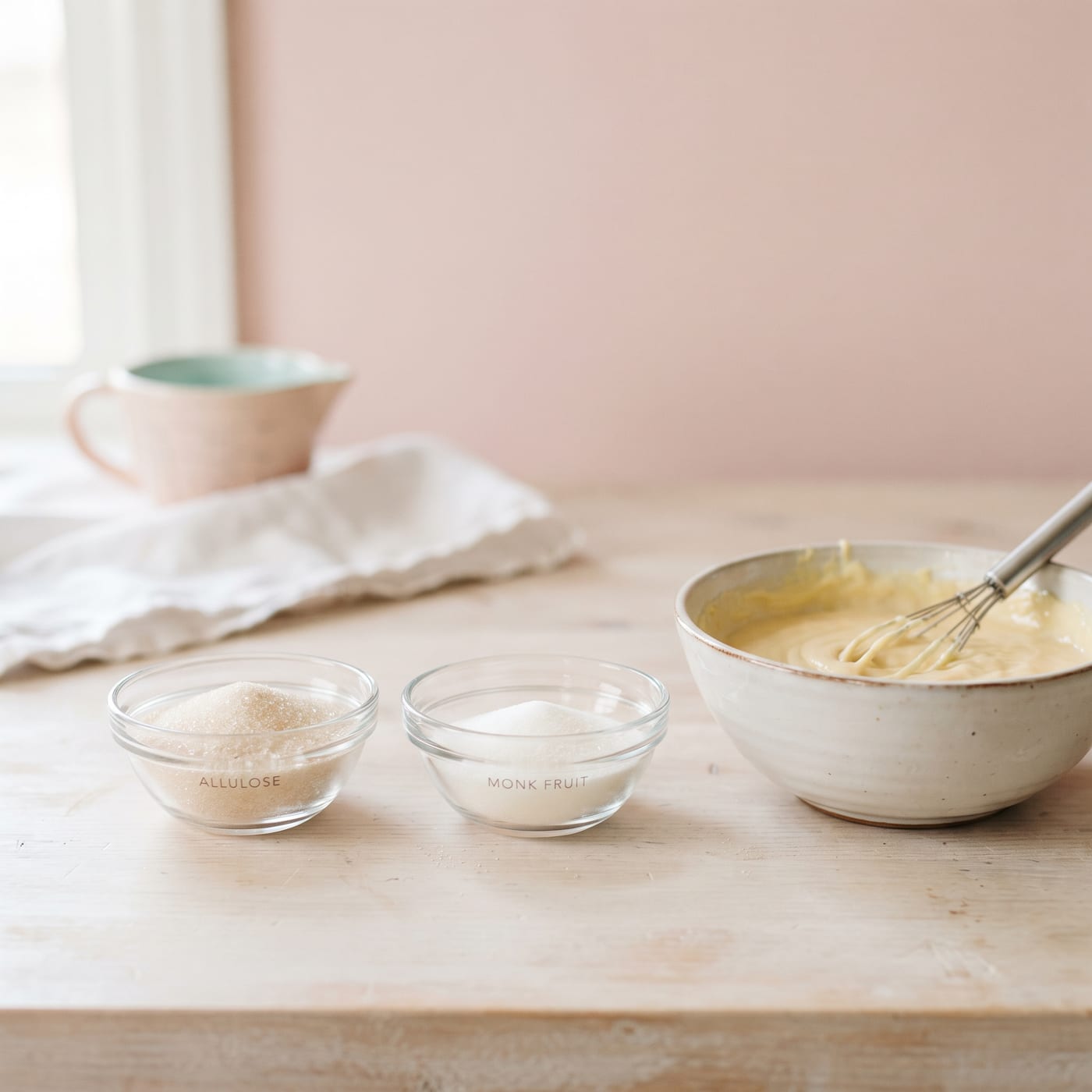
Allulose works best because it browns, dissolves, and measures just like sugar, cup for cup. I use it in most of my low-sugar test batches and get results close to the original recipe.
It has about 70 percent of sugar's sweetness, so cupcakes come out a touch less sweet even at a full swap. Allulose also holds moisture well, which keeps crumb soft instead of crumbly.
- Swap ratio: 1 cup allulose for 1 cup sugar.
- Browning: yes, allulose caramelizes in the oven.
- Best for: vanilla, chocolate, and spice cupcakes.
Monk Fruit: Strong Sweetness, Needs Backup
Monk fruit blends are very sweet, so you need far less than the sugar amount the recipe calls for. Check your specific brand, most blended monk fruit sweeteners suggest using half the volume of sugar.
Because monk fruit adds almost no bulk or moisture, cupcakes can turn dense without help. I add 1 to 2 tablespoons of extra milk or applesauce per batch when I use it alone.
- Check the label ratio, brands vary a lot.
- Add extra liquid to replace lost bulk.
- Pair with allulose for better texture and browning.
Maple Extract: Bringing Back the Flavor Sugar Left Behind
Maple extract adds warmth and roundness that plain sugar substitutes cannot fake. A small amount tricks your brain into reading the cupcake as richer and sweeter than it measures.
I add 1/4 teaspoon per standard 12-cupcake batch, right alongside the vanilla. It works especially well in spice, chocolate, and brown butter style cupcakes where sugar's caramel notes are missed most.
- Use 1/4 tsp maple extract per 12-cupcake batch
- Add with vanilla, not as a full replacement.
- Best paired with cinnamon, chocolate, or brown butter flavors.
The 50 Percent Rule for Cutting Sugar Safely
Cut sugar by no more than half if you want cupcakes that still rise and hold shape. Going further usually collapses the structure, since sugar also supports the batter while it bakes.
For a recipe using 1 cup sugar, try 1/2 cup allulose plus a small amount of monk fruit blend to hit the sweetness level without the full sugar volume. This combo keeps moisture and browning close to the original.
- Start at 25 percent sugar reduction for your first test.
- Move to 50 percent once texture looks right.
- Never cut more than 50 percent in one recipe.
Fixing Common Low-Sugar Cupcake Problems
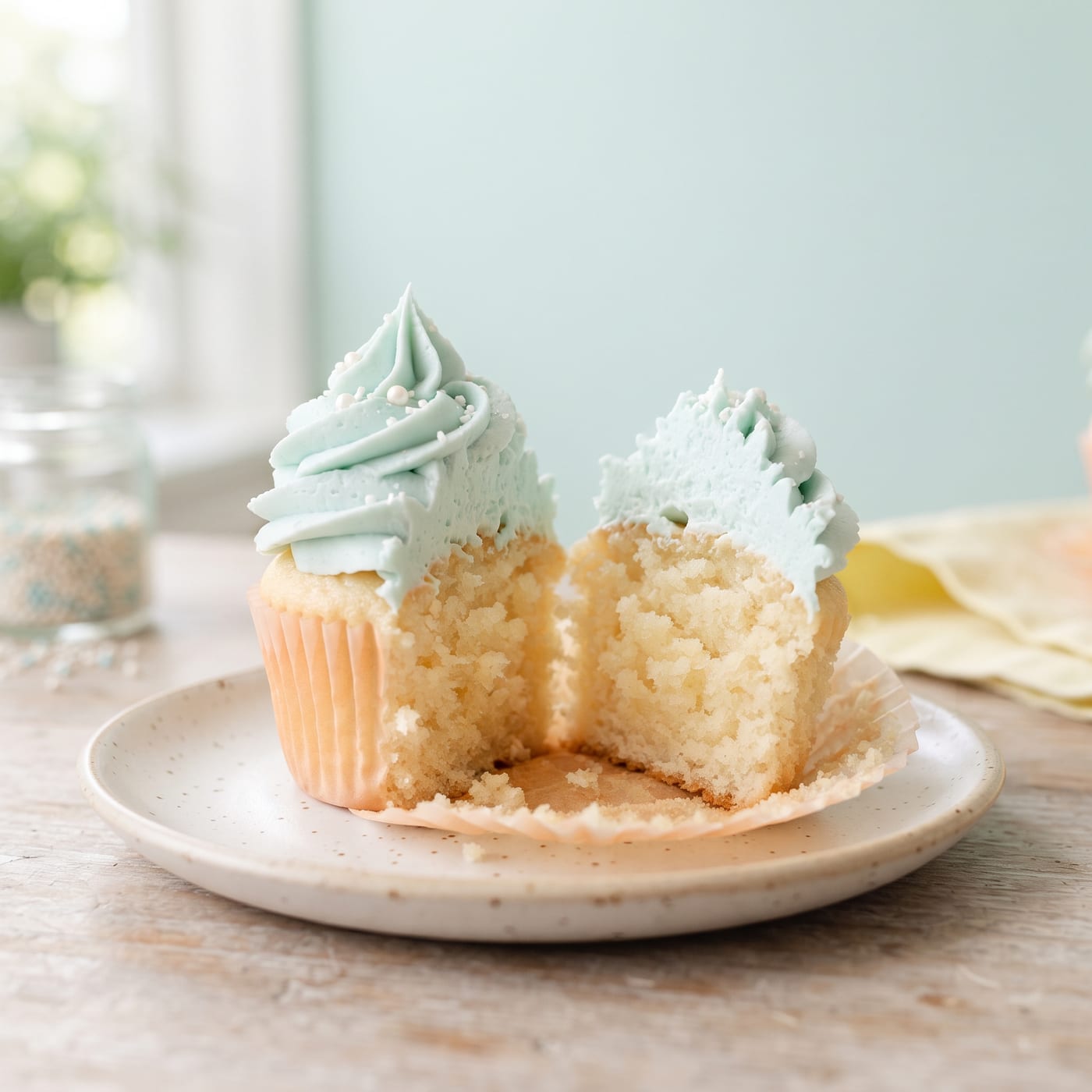
Dry or crumbly cupcakes almost always mean you cut too much sugar without adding back moisture. Add 1 to 2 tablespoons of sour cream, yogurt, or applesauce to fix this fast.
Pale tops usually mean your sweetener does not caramelize like sugar does. Brushing a thin egg wash on top before baking, or using allulose instead of monk fruit alone, brings back that golden color.
- Dry crumb: add sour cream, yogurt, or applesauce.
- Pale top: swap in allulose or brush with egg wash.
- Flat flavor: add maple extract or a pinch more salt.
FAQ
Can I use allulose and monk fruit together in one cupcake recipe?
Yes, and it often works better than using either alone. Allulose brings moisture and browning, while monk fruit adds strong sweetness in a small amount, so together they cover what sugar does on its own.
Does maple extract make cupcakes taste like maple syrup?
Not at the amount I recommend. At 1/4 teaspoon per batch, maple extract adds warmth and depth without a strong maple flavor, it mostly fills in richness that low-sugar batters lose.
Why did my low-sugar cupcakes sink in the middle?
Sugar supports batter structure while it bakes, so cutting too much at once can cause sinking. Stay at or below the 50 percent reduction rule and add a little extra egg or yogurt for support.
Is allulose safe to bake with at normal oven temperatures?
Yes, allulose is heat stable and works fine at typical cupcake baking temperatures of 325 to 350 degrees Fahrenheit. It browns similarly to sugar, so watch your bake time closely near the end.