
What Baking Powder Actually Does
By Sarah, Incr-EdibleCupCakes. Updated 2026-09-09.
Baking powder makes cupcakes rise by releasing carbon dioxide gas, which gets trapped in the batter and expands in the oven's heat.
| Leavener | Needs Acid? | Reacts When |
|---|---|---|
| Baking powder | No, contains its own | Wet, then again with heat |
| Baking soda | Yes, needs buttermilk or cocoa | Immediately when wet and warm |
What Baking Powder Actually Does in Batter
Baking powder releases carbon dioxide gas that gets trapped in your batter and makes cupcakes rise. The gas forms tiny bubbles that expand when they hit oven heat, pushing the batter up and out.
I tested this side by side once, one batch with powder and one without. The batch without stayed flat and dense, almost like a pancake in a liner.
Why It Needs Both Water and Heat
Baking powder is double acting, which means it works in two separate stages. The first burst of gas happens the moment it touches liquid in your batter, and the second. Bigger burst happens once the oven heat kicks in.
This two step reaction is why you should not let mixed batter sit too long before baking. If you wait an hour, you lose that first gas burst and your cupcakes will not climb as high.
- Stage one: liquid hits the powder, small bubbles start forming.
- Stage two: oven heat triggers the bigger rise.
- Batter left sitting too long loses stage one gas.
Baking Powder vs Baking Soda
Baking powder already contains its own acid, so it works in any batter on its own. Baking soda has no acid built in, so it needs something like buttermilk, cocoa, or brown sugar to react with.
Mixing them up in a recipe leads to flat cupcakes or a bitter, soapy taste. If a recipe calls for both, it usually needs the soda for flavor balance and the powder for lift.
How Much to Use and Why It Matters
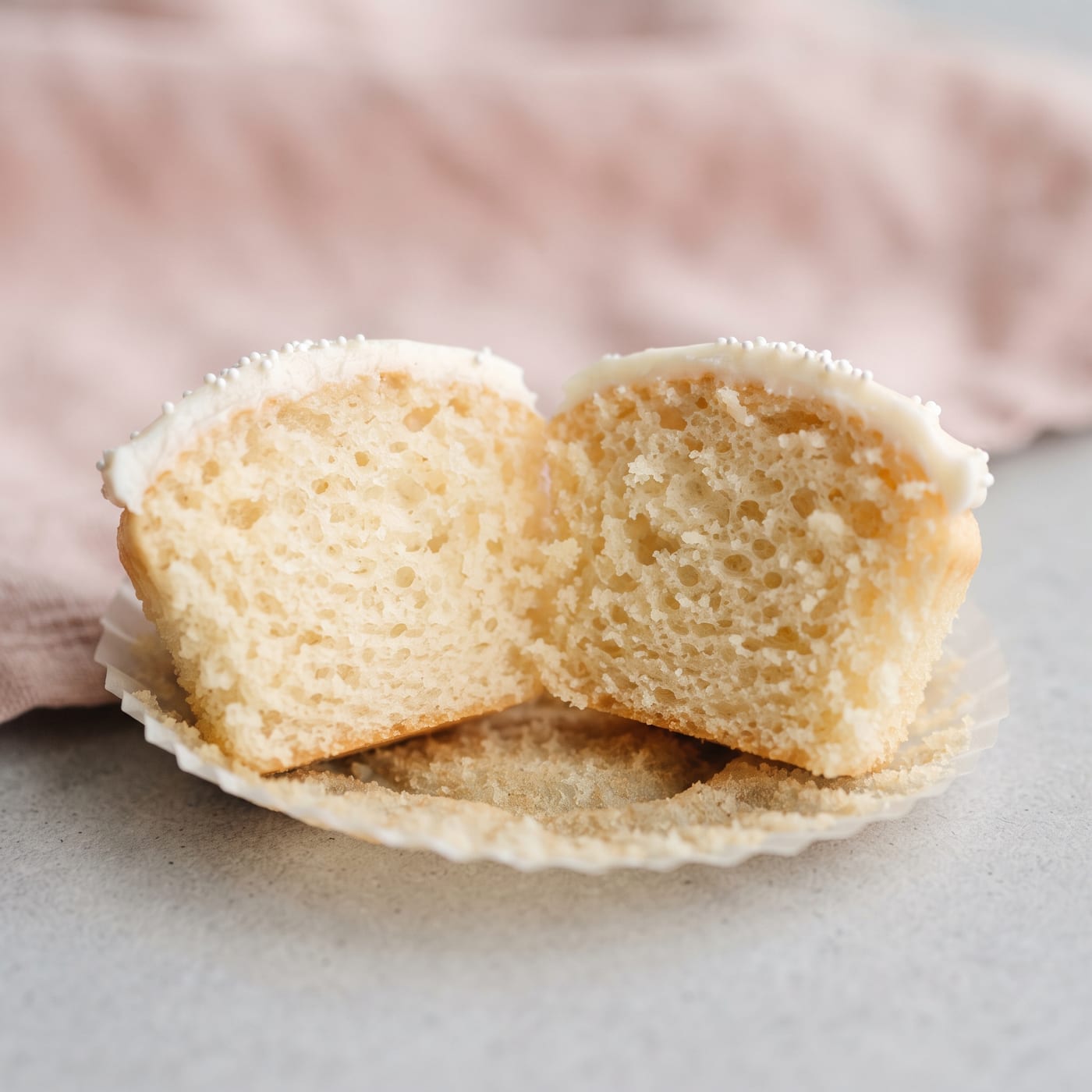
The standard ratio is one teaspoon of baking powder per cup of flour. This gives enough gas to lift the batter without leaving a bitter aftertaste.
Adding extra powder does not mean extra height. Too much creates so many bubbles at once that they burst and collapse, leaving cupcakes with a sunken middle and a metallic taste.
- 1 cup flour: 1 teaspoon baking powder.
- 2 cups flour: 2 teaspoons baking powder.
- More powder does not equal more rise, it can ruin the crumb.
How to Test If Your Baking Powder Still Works
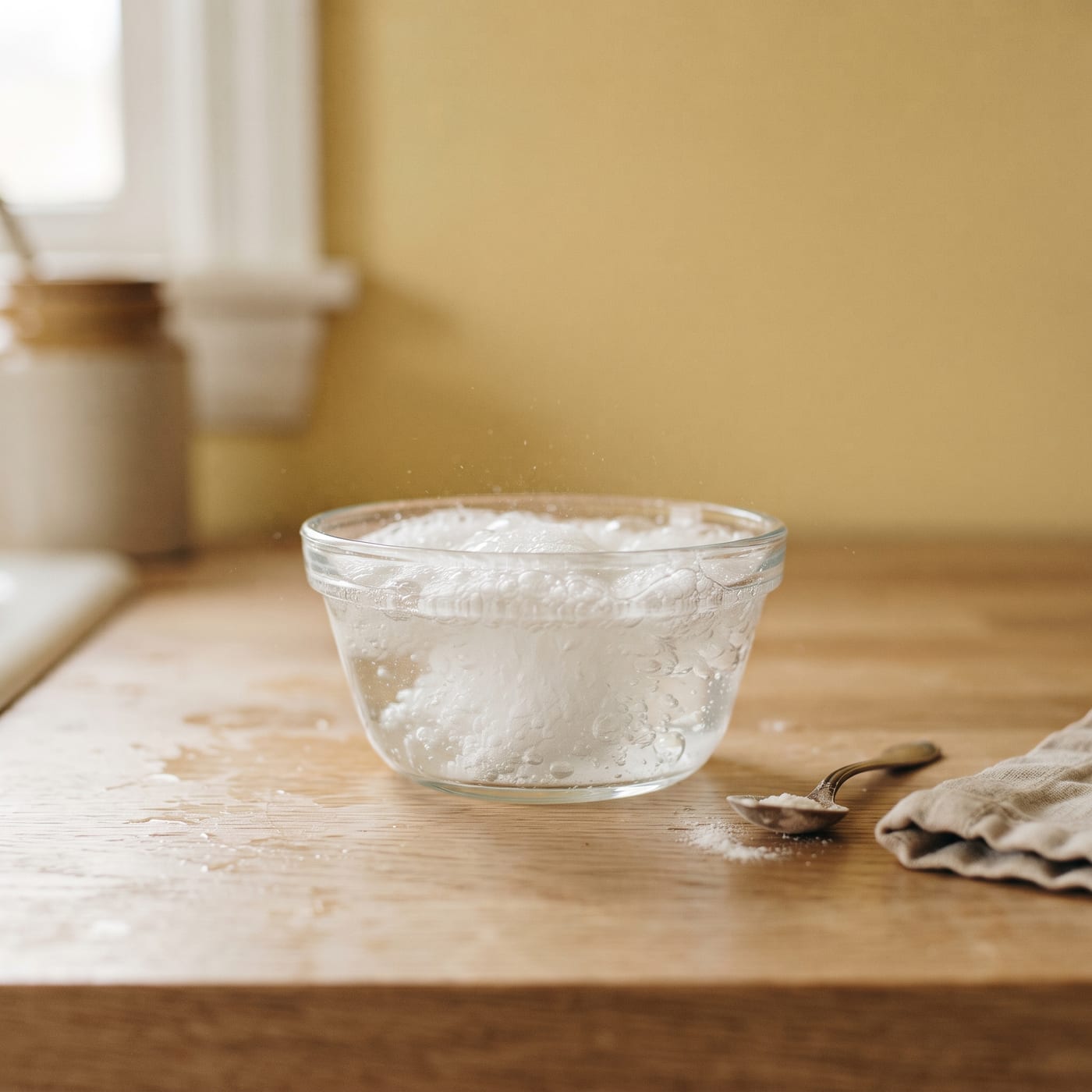
Drop half a teaspoon of baking powder into a small cup of hot water. If it fizzes right away, it is still active and safe to bake with.
Weak or no fizzing means it has lost its power and your cupcakes will bake flat. I check mine every few months since I do not bake with it daily.
FAQ
Can I use baking soda instead of baking powder in cupcakes?
Only if your batter already has an acidic ingredient like buttermilk or brown sugar. Otherwise the soda has nothing to react with and your cupcakes will taste flat and slightly soapy.
Why did my cupcakes sink in the middle after baking?
This usually means too much baking powder created too many gas bubbles at once. The bubbles burst before the batter set, causing the center to collapse.
Does baking powder expire?
Yes, it usually loses strength after 6 to 12 months once opened. Test it in hot water before using it in a big batch of cupcakes.
Why do my cupcakes taste bitter or metallic?
This is a common sign of too much baking powder in the recipe. Cut back slightly, closer to the standard 1 teaspoon per cup of flour.
Should I let cupcake batter rest before baking?
No, resting batter too long wastes the first gas release from the baking powder. Bake within 20 to 30 minutes of mixing for the best rise.