
How to Test Cupcakes for Doneness
By Sarah, Incr-EdibleCupCakes. Updated 2026-08-10.
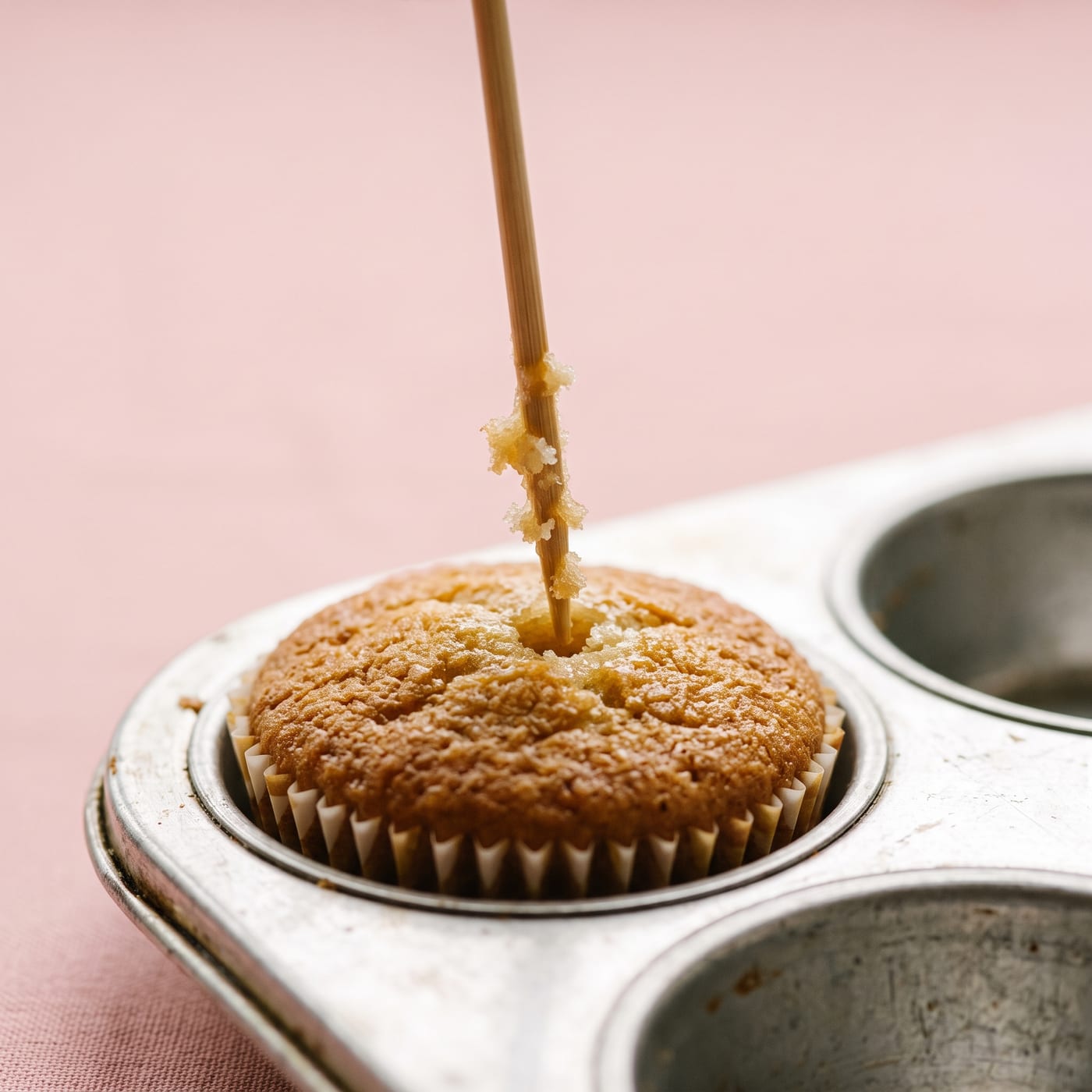
Test cupcakes for doneness with a toothpick inserted in the center: it should come out with a few moist crumbs. Not wet batter. Back this up with a light bounce test on top of the cake.
| Test | What You Check | Sign of Doneness |
|---|---|---|
| Toothpick test | Center of tallest cupcake | A few moist crumbs, no wet batter |
| Light bounce | Gentle press on the top | Springs back with no dent |
| Temperature check | Internal center reading | 205°F to 210°F |
| Visual check | Edges and color | Edges pull from liner, even golden color |
Why the Toothpick Test Works
The toothpick test works because it shows you what is happening inside the cake, not just the surface. Cupcake tops can look golden and set while the center is still wet batter.
Insert a toothpick or thin skewer into the center of the tallest cupcake in the pan. Pull it straight up and look at what sticks to it before you decide anything.
- Clean toothpick: overbaked, pull them out now.
- A few moist crumbs stuck on: perfectly done.
- Wet batter clinging to it: needs more time.
- Test the center cupcake, it bakes slowest.
The Light Bounce Method Explained
The bounce method checks doneness without poking a hole in your cupcake. Press the top center very gently with one fingertip and watch how it reacts.
A done cupcake springs back up right away and leaves no dent. An underbaked one stays sunken where you pressed, because the crumb structure has not set yet.
- Springs back instantly: ready to come out.
- Slow spring back: give it 1 to 2 more minutes.
- Leaves a dent that stays: needs more bake time.
- Feels wet or sticky: not close to done.
Why Two Tests Beat One
Using both tests catches mistakes that one alone can miss. The toothpick can hit a pocket of air and come out clean even in an underbaked cupcake.
The bounce test confirms the whole surface has set evenly, not just the one spot you poked. Together they give you a much more reliable read, especially on new recipes or pans you have not used before.
- Toothpick alone: can miss uneven pockets of batter.
- Bounce alone: harder to judge on domed tops.
- Both together: catches most false readings.
- Use both on any recipe you are baking for the first time.
Visual and Smell Cues to Watch
Your eyes and nose give you clues before you even touch the cupcake. Look at the edges first: they should pull away slightly from the liner and look matte, not shiny or wet.
A baking smell that turns from sweet batter to a warm toasted note usually means the cupcakes are close. If the kitchen smells like it is starting to burn, check immediately, you are likely a minute or two past done.
- Edges look dry and pull from the liner slightly.
- Top has an even golden color, not pale or shiny.
- Smell shifts from raw batter to warm baked cake.
- Domed centers look set, not glossy or jiggly.
What Temperature Confirms Doneness
An instant read thermometer gives the most exact answer if you want to skip guessing. Insert it into the center of a cupcake and look for 205°F to 210°F.
This method helps a lot with dense batters like carrot cake or banana, where crumbs on a toothpick are harder to read. It also helps if you bake at high altitude, where times shift and visual cues get less reliable.
- 205°F to 210°F: fully baked through.
- Below 200°F: needs more time in the oven.
- Best for dense batters: carrot, banana, pumpkin.
- Useful backup when toothpick crumbs look ambiguous.
Common Doneness Mistakes to Avoid
The biggest mistake is testing only the shortest cupcakes in the pan. Outer cupcakes near the pan edges bake faster than center ones, so always test the tallest, most central cupcake.
Another common error is opening the oven door too early to check. This drops the oven temperature fast and can cause cupcakes to sink in the middle before they finish setting.
- Testing edge cupcakes instead of the center one.
- Opening the oven door before the earliest bake time.
- Pulling cupcakes based on color alone.
- Skipping the bounce test on domed or tall cupcakes.
FAQ
How do I test cupcakes for doneness without a toothpick?
Use the light bounce method instead. Press the top center gently with your fingertip and check if it springs back with no dent left behind.
Why does my toothpick come out clean but the cupcakes still sink?
The toothpick may have missed a wet pocket, or you opened the oven door too soon and dropped the temperature. Test the center cupcake next time and avoid opening the door before the earliest bake time.
What internal temperature means cupcakes are fully baked?
Cupcakes are done between 205°F and 210°F on an instant read thermometer. This works especially well for dense batters like carrot or banana cupcakes.
Can I test doneness on chocolate cupcakes the same way?
Yes, but check the toothpick crumbs closely since dark batter can hide wetness. Combine it with the bounce test for a more reliable read on chocolate.
Why do my cupcakes look done on top but stay raw inside?
This usually means the oven runs hotter on top than in the center, or the pan sat too close to the top element. Move the rack to the middle position and always confirm with a center toothpick test.